

Inflation gets most of the headlines, but deflation, falling prices, is arguably feared more by central banks. This guide explains both and why policymakers aim for a specific middle ground.
The basic definitions
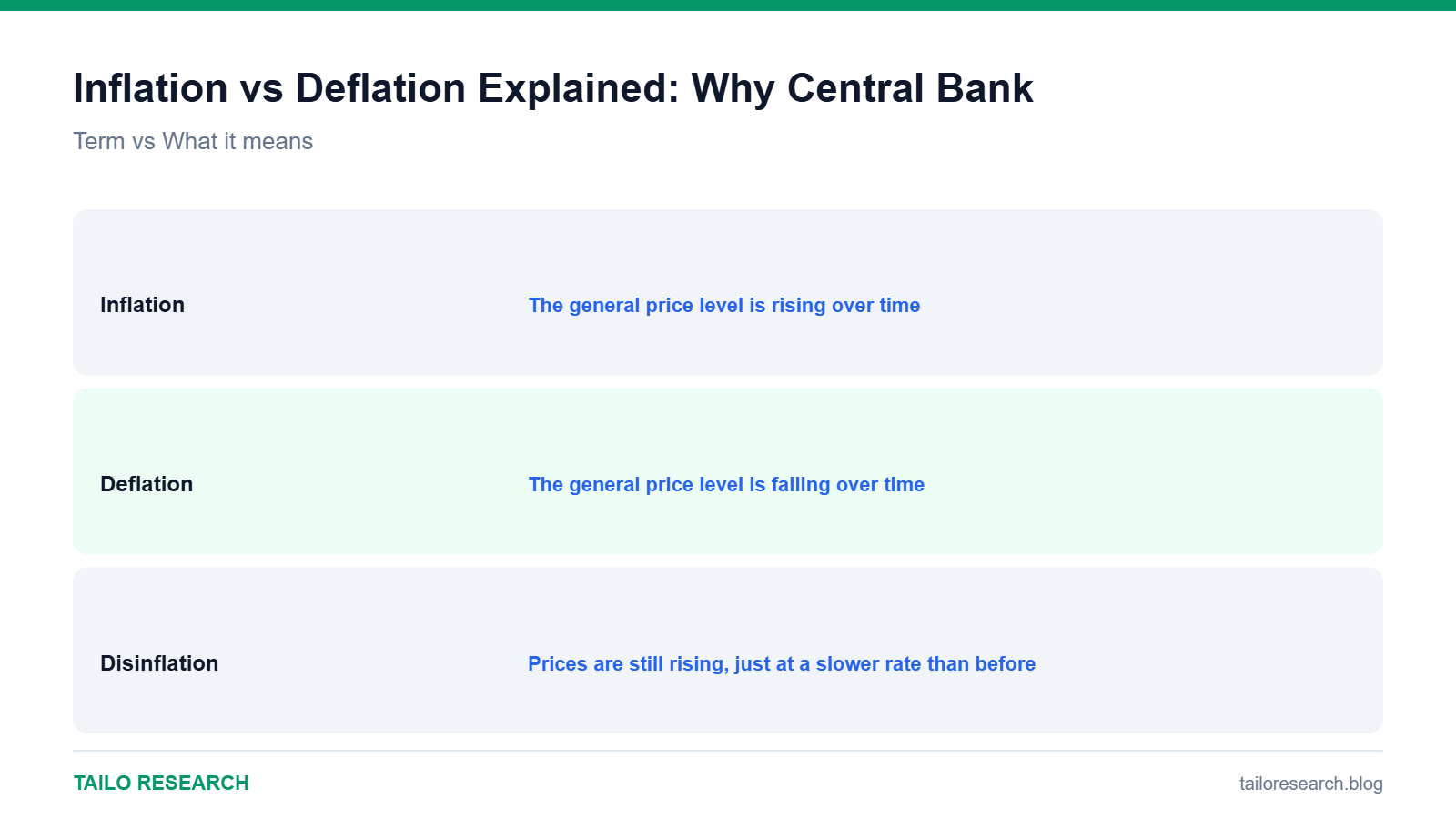
| Term | What it means |
|---|---|
| Inflation | The general price level is rising over time |
| Deflation | The general price level is falling over time |
| Disinflation | Prices are still rising, just at a slower rate than before |
Why central banks target moderate inflation, not zero
Most major central banks, including the Federal Reserve, target roughly 2% annual inflation, not zero. A small, stable amount of inflation gives central banks room to cut rates during downturns without hitting the zero lower bound, and it avoids the specific dangers of deflation.
Why deflation is so dangerous
Falling prices can cause consumers to delay purchases expecting even lower prices later, which reduces spending and can create a self-reinforcing economic slowdown. Deflation also increases the real burden of existing debt, since debts are fixed in nominal terms while the value of money is rising.
How each affects investors
- High inflation: erodes the real value of cash and fixed-income returns; can support hard assets like commodities
- Deflation: can support high-quality bonds, whose fixed payments become more valuable in real terms, but often pressures corporate earnings and equity valuations
Key takeaways
- Central banks generally target moderate inflation (around 2%), not zero.
- Deflation is feared more because it can trigger delayed spending and worsen real debt burdens.
- Inflation and deflation affect asset classes differently, from cash and bonds to commodities and equities.
Want to trade what you read here as a CFD alongside TradingView charts? Open a Vantage account. This is an affiliate link: we may earn a commission at no extra charge from us. CFDs are complex instruments and carry a high risk of losing money rapidly due to leverage; most retail accounts lose money.
Educational content only, not investment advice. Trading and investing involve risk, including the loss of your capital. Read our Risk Disclaimer and Affiliate Disclosure.


Leave a Reply