

The unemployment rate is one of the most-cited economic statistics, but the headline number alone can be misleading without context. This guide explains how it is calculated and what else to check.
How the unemployment rate is calculated
The unemployment rate divides the number of unemployed people actively looking for work by the total labor force (employed plus unemployed people seeking work). Critically, people who have stopped looking for work entirely are not counted as unemployed, they simply exit the labor force calculation.
Why the headline number can mislead
A falling unemployment rate can reflect genuine job growth, or it can partly reflect discouraged workers leaving the labor force altogether. The labor force participation rate, the share of the population working or actively looking, helps clarify which is happening.
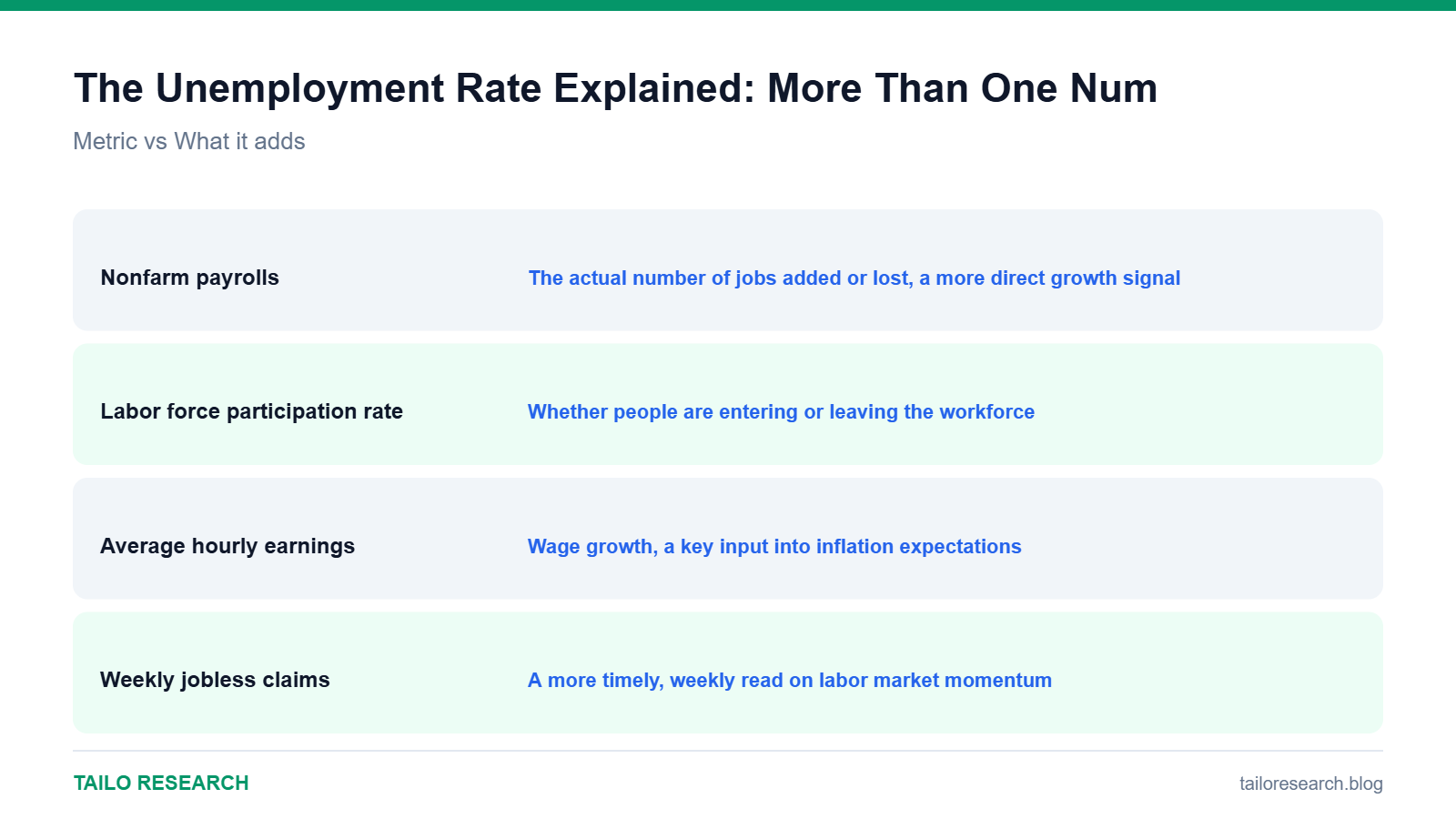
Other labor market figures worth checking alongside it
| Metric | What it adds |
|---|---|
| Nonfarm payrolls | The actual number of jobs added or lost, a more direct growth signal |
| Labor force participation rate | Whether people are entering or leaving the workforce |
| Average hourly earnings | Wage growth, a key input into inflation expectations |
| Weekly jobless claims | A more timely, weekly read on labor market momentum |
Why the Fed watches this closely
The US Federal Reserve has a dual mandate covering both price stability and maximum employment, so labor market data directly feeds into interest-rate decisions, not just growth data.
Key takeaways
- The unemployment rate only counts people actively looking for work, not everyone without a job.
- A falling rate can reflect job growth or discouraged workers leaving the labor force; check participation rate too.
- The Fed’s dual mandate means labor data directly influences interest-rate policy.
Want to trade what you read here as a CFD alongside TradingView charts? Open a Vantage account. This is an affiliate link: we may earn a commission at no extra charge from us. CFDs are complex instruments and carry a high risk of losing money rapidly due to leverage; most retail accounts lose money.
Educational content only, not investment advice. Trading and investing involve risk, including the loss of your capital. Read our Risk Disclaimer and Affiliate Disclosure.


Leave a Reply