

Consumer confidence indices measure how optimistic or pessimistic households feel about the economy, which can foreshadow actual spending behavior before it shows up in hard data. This guide covers the basics.
What these surveys measure
Consumer confidence surveys, such as the Conference Board’s Consumer Confidence Index and the University of Michigan’s Consumer Sentiment Index, ask households about their views on current economic conditions and expectations for the months ahead.
Why sentiment can lead spending
Since consumer spending makes up the largest share of GDP, how confident people feel about their job security and finances often shapes their willingness to spend, sometimes before that shift shows up in retail sales or GDP data itself.
The gap between sentiment and actual behavior
Sentiment surveys do not always predict actual spending accurately; people sometimes report pessimism while continuing to spend much as before, or vice versa. Treat sentiment data as one input, not a standalone forecast.
How markets react
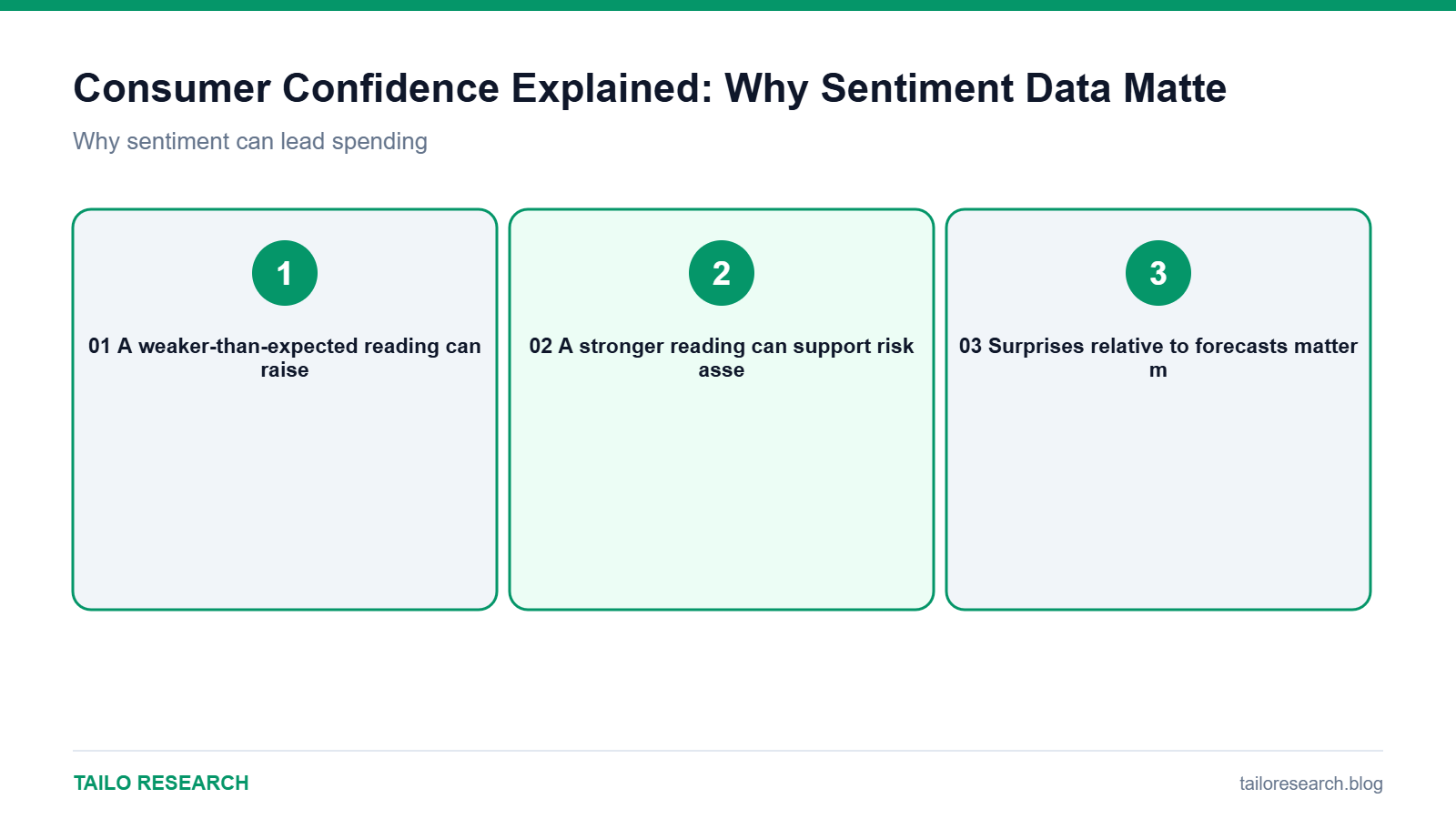
- A weaker-than-expected reading can raise concerns about future consumer spending and growth
- A stronger reading can support risk assets by reinforcing a resilient-economy narrative
- Surprises relative to forecasts matter more than the absolute level of the index
Key takeaways
- Consumer confidence surveys gauge household sentiment about current and future conditions.
- Sentiment can lead actual spending data, since spending is the largest GDP component.
- The gap between reported sentiment and actual spending behavior means it should be one input, not a standalone signal.
Want to trade what you read here as a CFD alongside TradingView charts? Open a Vantage account. This is an affiliate link: we may earn a commission at no extra charge from us. CFDs are complex instruments and carry a high risk of losing money rapidly due to leverage; most retail accounts lose money.
Educational content only, not investment advice. Trading and investing involve risk, including the loss of your capital. Read our Risk Disclaimer and Affiliate Disclosure.


Leave a Reply