

Central bank independence, the idea that monetary policy decisions should be insulated from short-term political pressure, is a cornerstone assumption markets rely on. This guide explains why it matters.
What independence actually means
An independent central bank sets interest rates and monetary policy based on its economic mandate (typically price stability and, in the US, also maximum employment), rather than at the direction of the elected government of the day.
Why markets value independence
Independence is meant to prevent short-term political incentives, like keeping rates low ahead of an election, from overriding what the economic data actually calls for. Markets generally price in more credibility, and lower long-term inflation expectations, when they trust a central bank’s independence.
What happens when independence is questioned
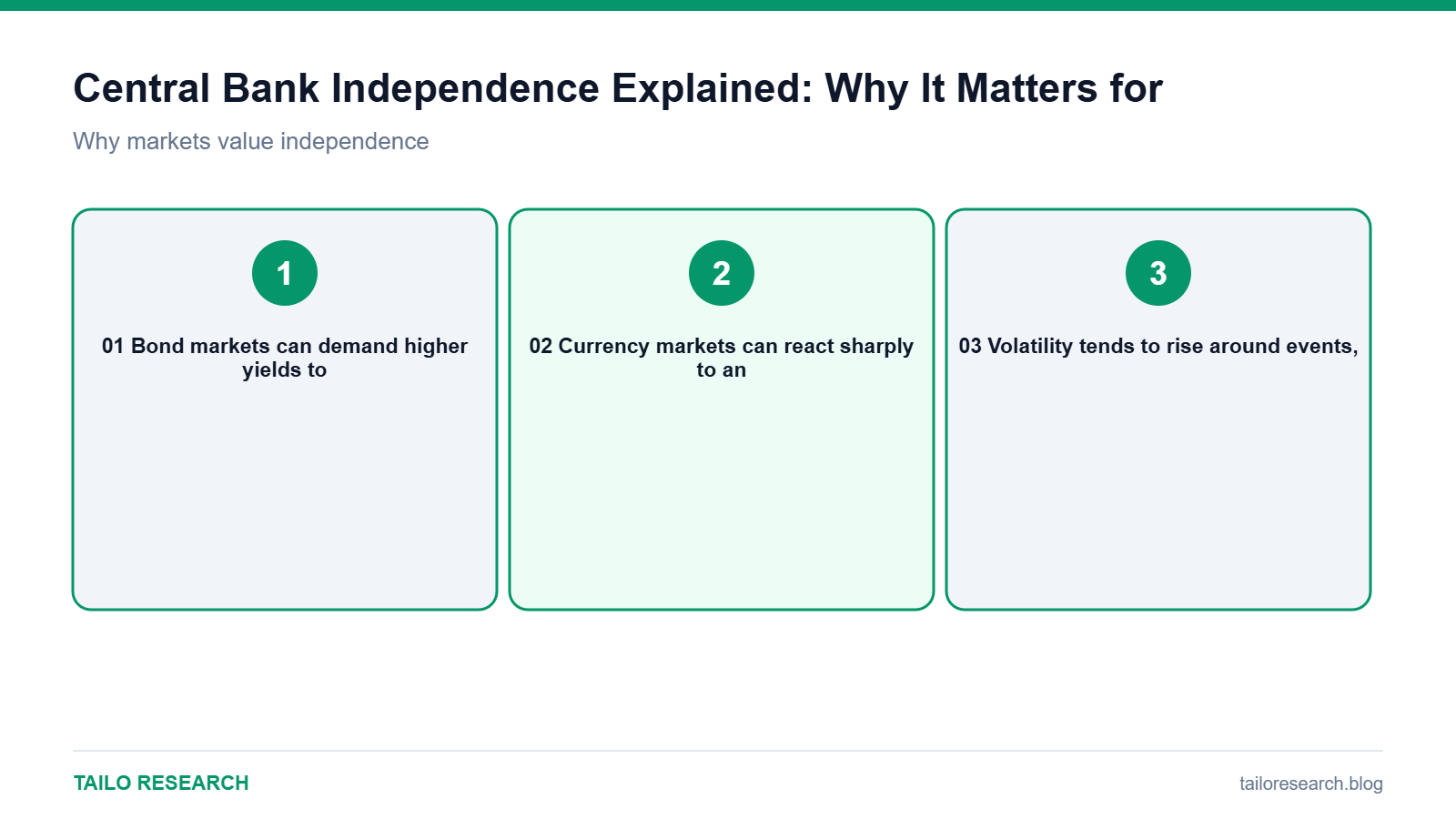
- Bond markets can demand higher yields to compensate for perceived inflation or credibility risk
- Currency markets can react sharply to any sign that political pressure is influencing rate decisions
- Volatility tends to rise around events, such as leadership transitions, that touch on this question
A structural, not a headline, issue
Central bank independence tends to matter most during specific flashpoints, such as leadership appointments or periods of unusually high political pressure on monetary policy, rather than being a daily trading factor.
Key takeaways
- Central bank independence means monetary policy is set by economic mandate, not short-term political pressure.
- Markets generally reward perceived independence with lower long-term inflation expectations.
- Questions about independence tend to move bond yields and currencies, especially around leadership transitions.
Want to trade what you read here as a CFD alongside TradingView charts? Open a Vantage account. This is an affiliate link: we may earn a commission at no extra charge from us. CFDs are complex instruments and carry a high risk of losing money rapidly due to leverage; most retail accounts lose money.
Educational content only, not investment advice. Trading and investing involve risk, including the loss of your capital. Read our Risk Disclaimer and Affiliate Disclosure.


Leave a Reply