

The yield curve is one of the most closely watched charts in finance, plotting interest rates across different bond maturities. This guide explains what it shows and why inversions draw so much attention.
What the yield curve normally looks like
In a typical, healthy economy, longer-maturity bonds pay higher yields than shorter-maturity ones, compensating investors for the extra time their money is locked up and the added uncertainty over a longer horizon. Plotted on a chart, this produces an upward-sloping curve.
What an inversion means
A yield curve inverts when short-term yields rise above long-term yields, often the 2-year Treasury yield exceeding the 10-year. This is unusual and reflects investors expecting economic weakness, or Fed rate cuts, ahead.
Why it’s watched as a recession signal
An inverted 2-year/10-year yield curve has preceded most US recessions since the 1970s, historically with a lag ranging from several months to over a year. It is one of the more reliable, though not perfect, recession indicators economists track.
Important limitations
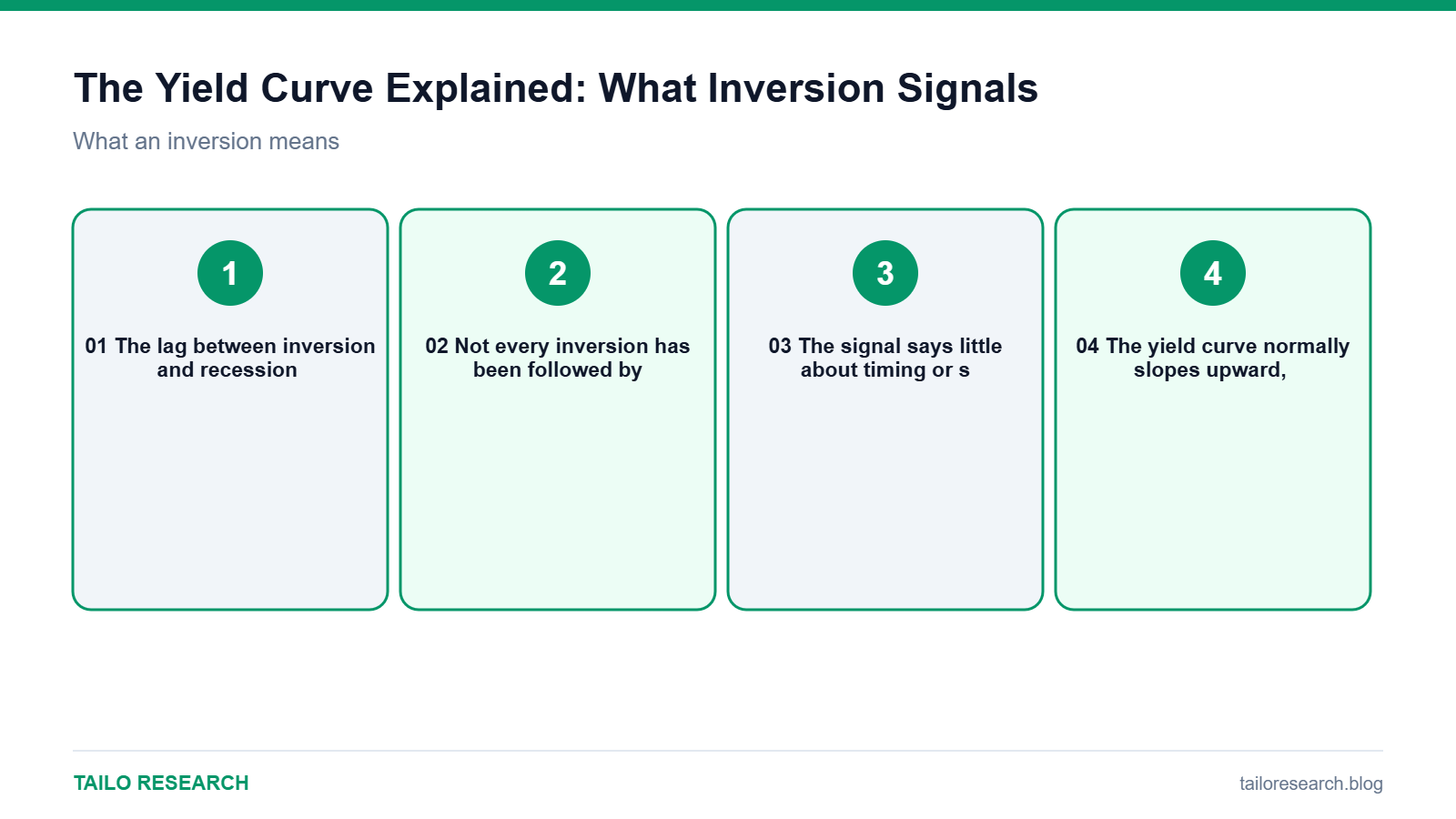
- The lag between inversion and recession has varied significantly across cycles
- Not every inversion has been followed by a recession
- The signal says little about timing or severity, only that risk has increased
Key takeaways
- The yield curve normally slopes upward, with longer maturities paying more.
- An inversion (short-term yields above long-term) has preceded most recent US recessions.
- It is a useful but imperfect signal, with inconsistent lag times between inversion and recession.
Want to trade what you read here as a CFD alongside TradingView charts? Open a Vantage account. This is an affiliate link: we may earn a commission at no extra charge from us. CFDs are complex instruments and carry a high risk of losing money rapidly due to leverage; most retail accounts lose money.
Educational content only, not investment advice. Trading and investing involve risk, including the loss of your capital. Read our Risk Disclaimer and Affiliate Disclosure.


Leave a Reply