

Most traders can describe their strategy in the abstract but cannot say precisely how it has actually performed over their last 50 trades. A trading journal closes that gap. This guide covers what to track and why it matters.
Why a journal matters more than it seems
Without a record, traders tend to remember big wins vividly and rationalize or forget losses, creating a distorted sense of how a strategy is actually performing. A journal replaces memory and feeling with an honest record you can review objectively.
What to record for every trade
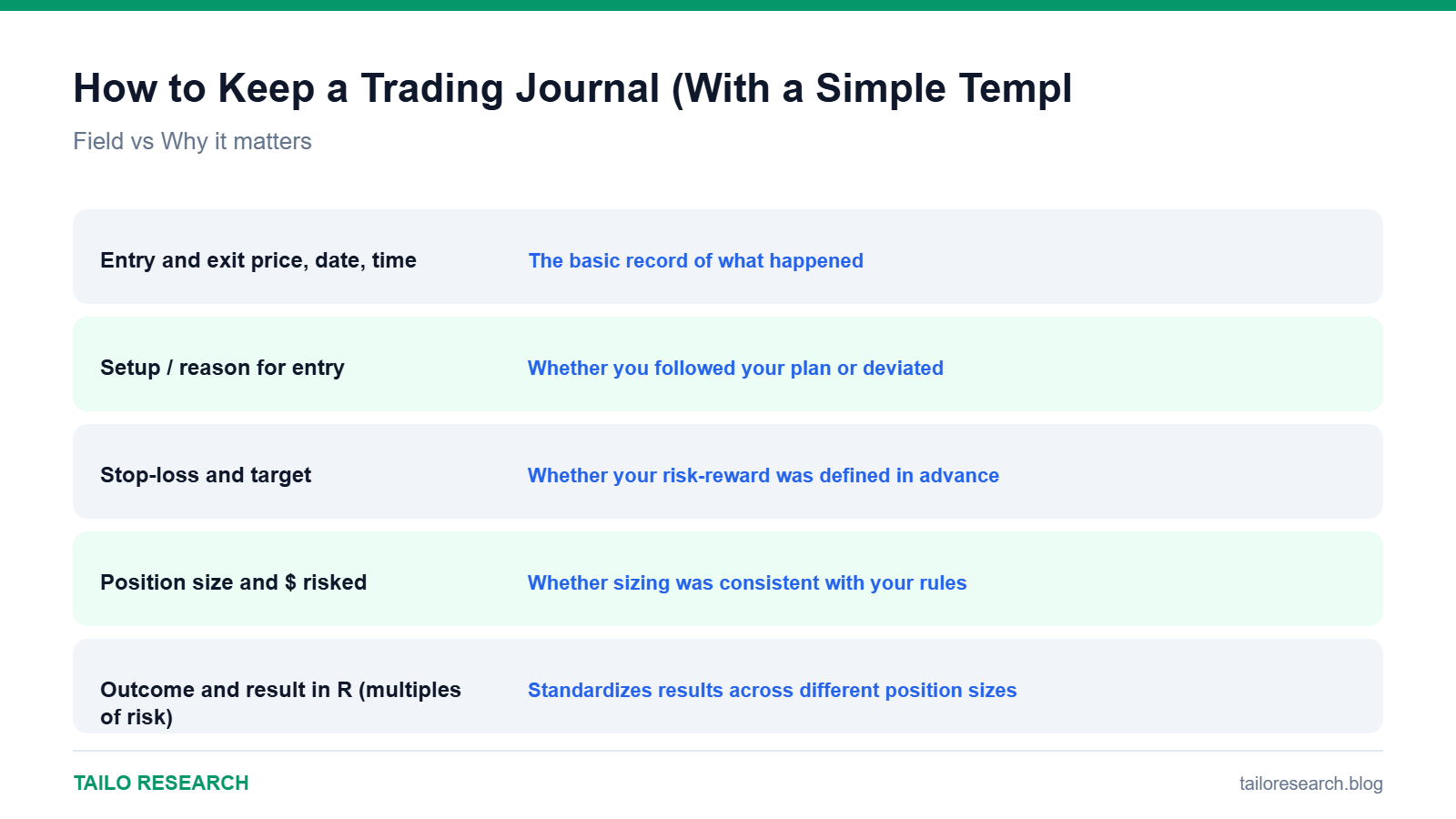
| Field | Why it matters |
|---|---|
| Entry and exit price, date, time | The basic record of what happened |
| Setup / reason for entry | Whether you followed your plan or deviated |
| Stop-loss and target | Whether your risk-reward was defined in advance |
| Position size and $ risked | Whether sizing was consistent with your rules |
| Outcome and result in R (multiples of risk) | Standardizes results across different position sizes |
| Notes on execution and emotion | Reveals patterns in discipline over time |
How to actually use the journal
- Review it weekly, not just after big wins or losses
- Look for patterns: which setups actually work, and which you keep taking despite poor results
- Check whether your actual risk-reward matches what you planned before entry
- Use it to hold yourself accountable to your own rules, not just to record outcomes
Key takeaways
- A trading journal replaces selective memory with an honest, reviewable record.
- Recording setup, risk-reward and execution notes reveals more than just win/loss.
- Regular review, not just logging, is what turns a journal into an improvement tool.
Want to trade what you read here as a CFD alongside TradingView charts? Open a Vantage account. This is an affiliate link: we may earn a commission at no extra charge from us. CFDs are complex instruments and carry a high risk of losing money rapidly due to leverage; most retail accounts lose money.
Educational content only, not investment advice. Trading and investing involve risk, including the loss of your capital. Read our Risk Disclaimer and Affiliate Disclosure.


Leave a Reply