

Stablecoins are cryptocurrencies designed to hold a stable value, usually pegged to the US dollar, making them useful for trading, payments and moving value without crypto’s typical volatility. This guide covers how they work and where the risks lie.
The main types of stablecoins
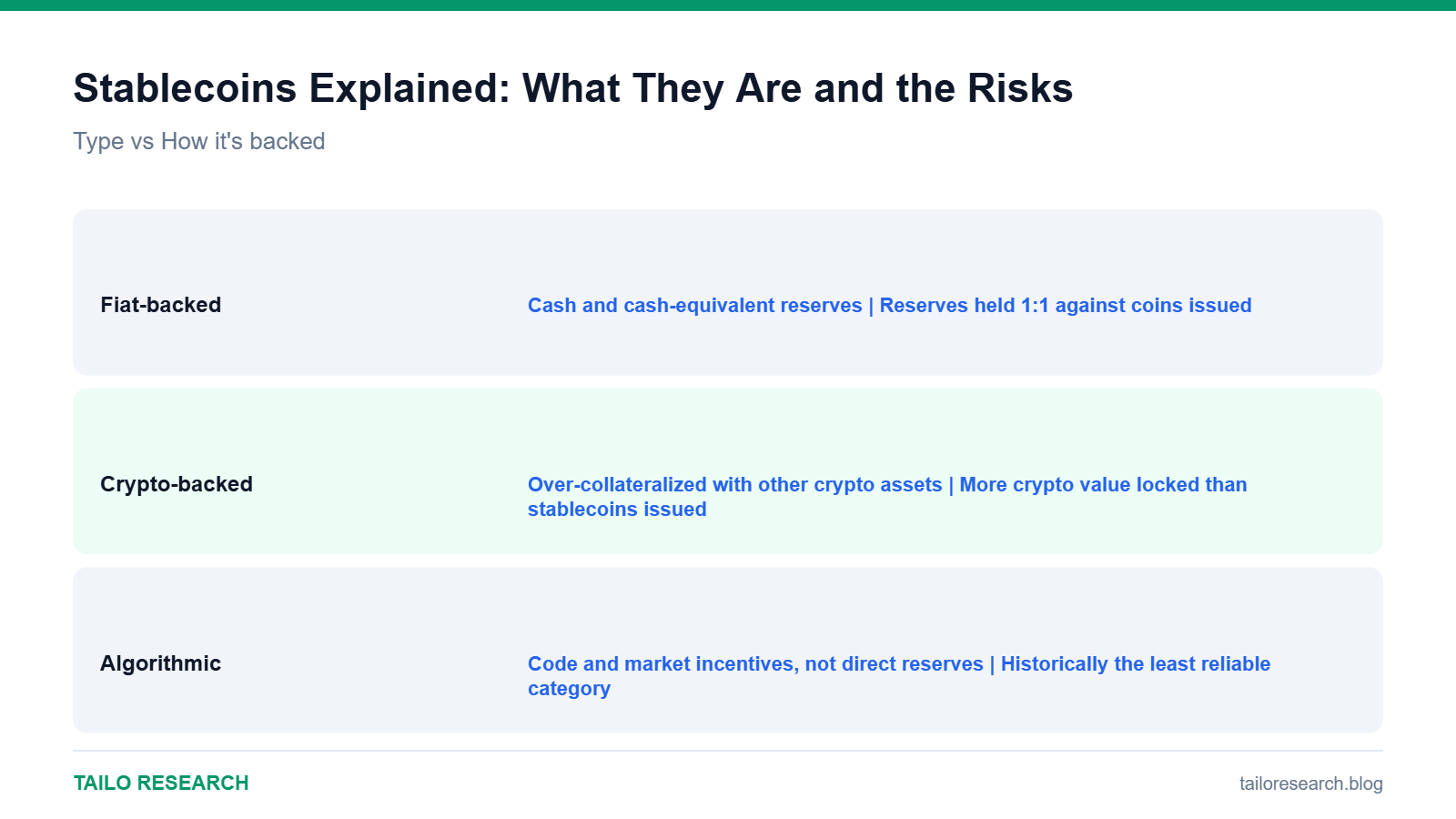
| Type | How it’s backed | Example approach |
|---|---|---|
| Fiat-backed | Cash and cash-equivalent reserves | Reserves held 1:1 against coins issued |
| Crypto-backed | Over-collateralized with other crypto assets | More crypto value locked than stablecoins issued |
| Algorithmic | Code and market incentives, not direct reserves | Historically the least reliable category |
Why the backing mechanism matters
A stablecoin’s stability depends entirely on the quality and transparency of what backs it. Fiat-backed stablecoins are only as reliable as the reserves behind them and the audits confirming those reserves actually exist. Algorithmic stablecoins have a history of catastrophic failures when market confidence breaks down.
What to check before holding a stablecoin
- Whether the issuer publishes regular, independently audited reserve reports
- What the reserves are actually held in (cash vs. riskier assets)
- The stablecoin’s track record of maintaining its peg during past periods of market stress
Key takeaways
- Stablecoins aim to hold a stable value, most commonly pegged to the US dollar.
- Fiat-backed stablecoins depend on transparent, audited reserves; algorithmic ones carry a history of failures.
- Check reserve transparency and peg track record before relying on any stablecoin.
Want to trade what you read here as a CFD alongside TradingView charts? Open a Vantage account. This is an affiliate link: we may earn a commission at no extra charge from us. CFDs are complex instruments and carry a high risk of losing money rapidly due to leverage; most retail accounts lose money.
Educational content only, not investment advice. Trading and investing involve risk, including the loss of your capital. Read our Risk Disclaimer and Affiliate Disclosure.


Leave a Reply