

An initial public offering (IPO) is the process by which a private company sells shares to the public for the first time, becoming a publicly traded company. This guide covers the basics and the risks specific to newly listed stocks.
The IPO process, simplified
- The company hires investment banks (underwriters) to manage the offering
- The company files a prospectus (in the US, an S-1) disclosing financials and risks
- Underwriters set an initial price range and gauge investor demand
- Shares are priced and allocated to institutional investors before the stock opens to public trading
Why IPO stocks are often volatile
Newly listed stocks often lack a long trading history, meaning less data for valuation, more speculative interest and thinner initial trading volume, any of which can produce sharp price swings in the days and weeks after listing.
The lock-up period
Company insiders and early investors are typically restricted from selling shares for a set period after the IPO, often 90 to 180 days, known as the lock-up period. When it expires, a wave of new selling can pressure the stock, which is worth watching if you hold a recent IPO.
What to check before buying an IPO
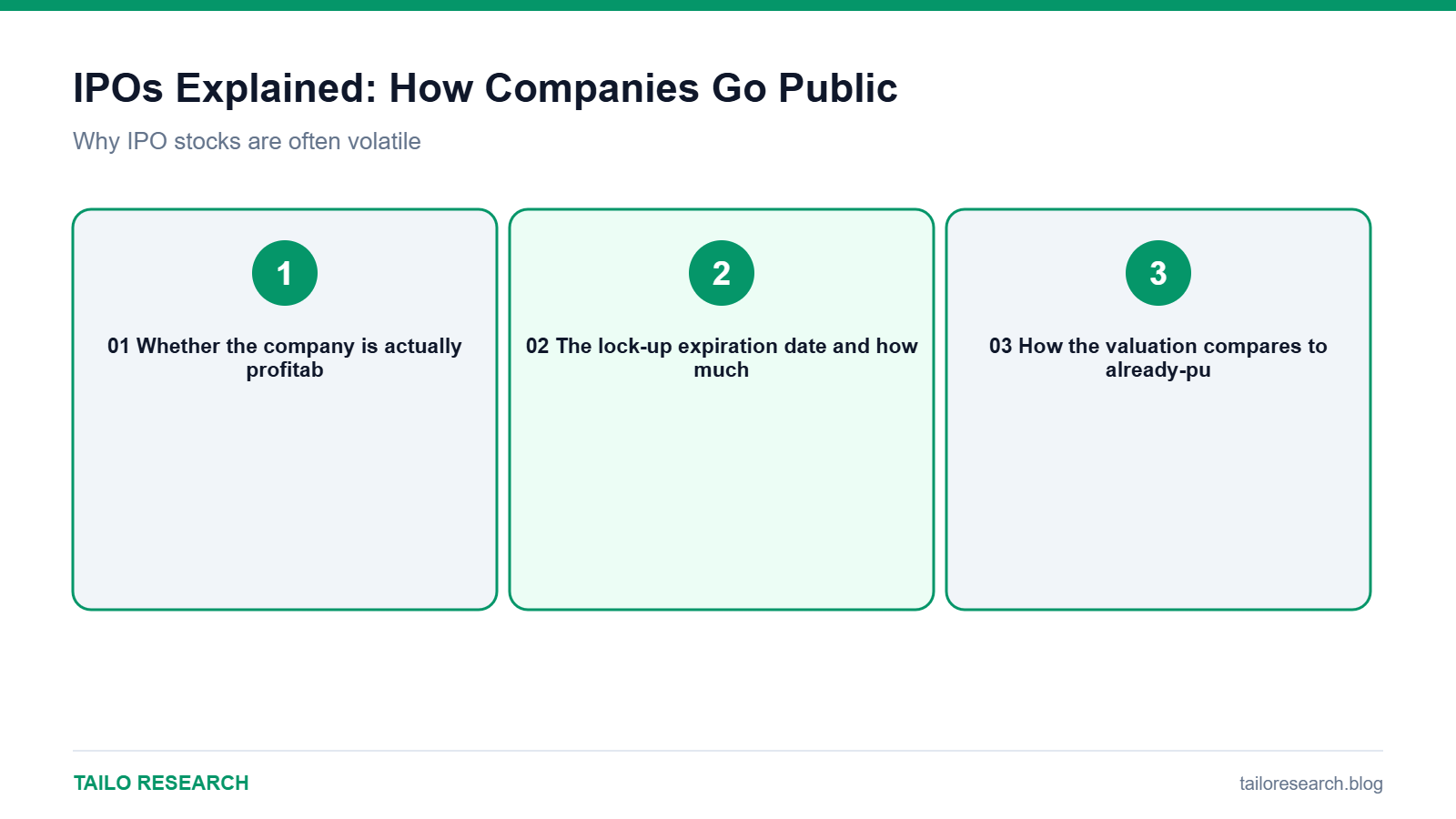
- Whether the company is actually profitable, or how far away profitability is
- The lock-up expiration date and how much insider ownership it covers
- How the valuation compares to already-public competitors in the same industry
Key takeaways
- An IPO is the process of a private company selling shares to the public for the first time.
- Newly listed stocks often carry higher volatility due to limited trading history.
- The lock-up period expiration can trigger a new wave of selling pressure.
Want to trade what you read here as a CFD alongside TradingView charts? Open a Vantage account. This is an affiliate link: we may earn a commission at no extra charge from us. CFDs are complex instruments and carry a high risk of losing money rapidly due to leverage; most retail accounts lose money.
Educational content only, not investment advice. Trading and investing involve risk, including the loss of your capital. Read our Risk Disclaimer and Affiliate Disclosure.


Leave a Reply