

Crypto markets are known for dramatic, multi-year cycles: sharp bull markets followed by deep, prolonged bear markets. This guide covers the pattern and why it tends to be more extreme than traditional equity cycles.
The typical cycle pattern
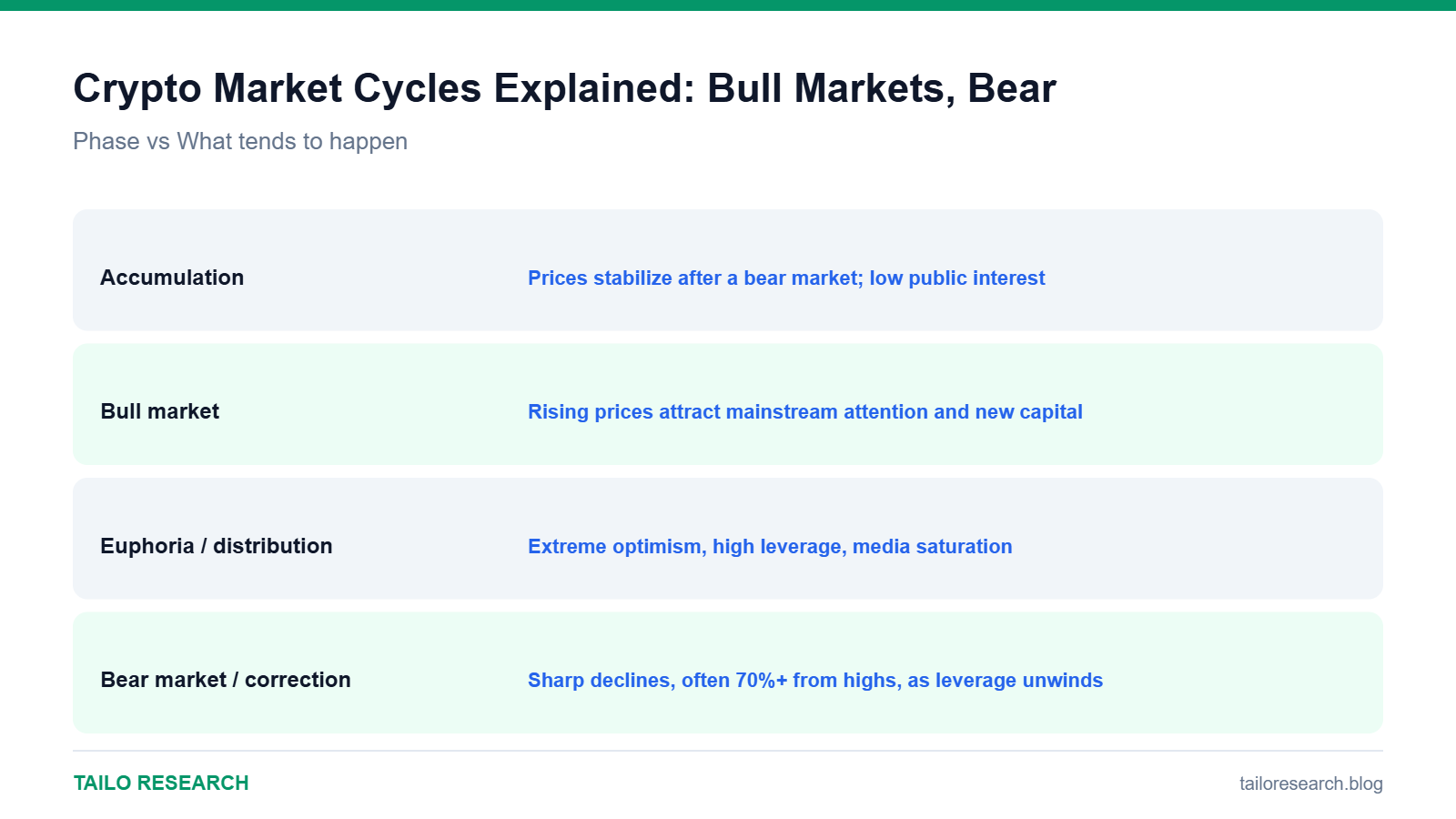
| Phase | What tends to happen |
|---|---|
| Accumulation | Prices stabilize after a bear market; low public interest |
| Bull market | Rising prices attract mainstream attention and new capital |
| Euphoria / distribution | Extreme optimism, high leverage, media saturation |
| Bear market / correction | Sharp declines, often 70%+ from highs, as leverage unwinds |
Why crypto cycles tend to be more extreme
- Leverage: crypto derivatives markets often carry high leverage, amplifying both rallies and crashes
- 24/7 trading: no market close to pause momentum or panic
- Retail-heavy participation: sentiment-driven buying and selling plays a larger role than in more institutionally dominated markets
- Narrative-driven: price moves are often tied to specific narratives (halvings, ETF approvals, new technology) that can shift quickly
A practical takeaway for risk management
Position sizing and having a plan for both euphoric and bearish phases matters more in crypto than in most traditional asset classes, given how sharply sentiment, and price, can swing in both directions.
Key takeaways
- Crypto cycles typically move through accumulation, bull market, euphoria and bear market phases.
- Leverage, 24/7 trading and retail-heavy participation tend to make crypto cycles more extreme than equities.
- Position sizing discipline matters especially in a market prone to sharp reversals.
Want to trade what you read here as a CFD alongside TradingView charts? Open a Vantage account. This is an affiliate link: we may earn a commission at no extra charge from us. CFDs are complex instruments and carry a high risk of losing money rapidly due to leverage; most retail accounts lose money.
Educational content only, not investment advice. Trading and investing involve risk, including the loss of your capital. Read our Risk Disclaimer and Affiliate Disclosure.


Leave a Reply