

An altcoin is any cryptocurrency other than Bitcoin, though the term is often used more narrowly to mean anything outside the two largest coins, Bitcoin and Ethereum. This guide covers the main categories and the added risks involved.
Common altcoin categories
- Smart-contract platforms: competitors to Ethereum aiming for faster or cheaper transactions
- Payment-focused coins: designed primarily for fast, low-cost transfers
- Utility tokens: tied to a specific application or platform’s functionality
- Meme coins: driven primarily by community and social attention rather than a specific technical use case
Why altcoins generally carry more risk
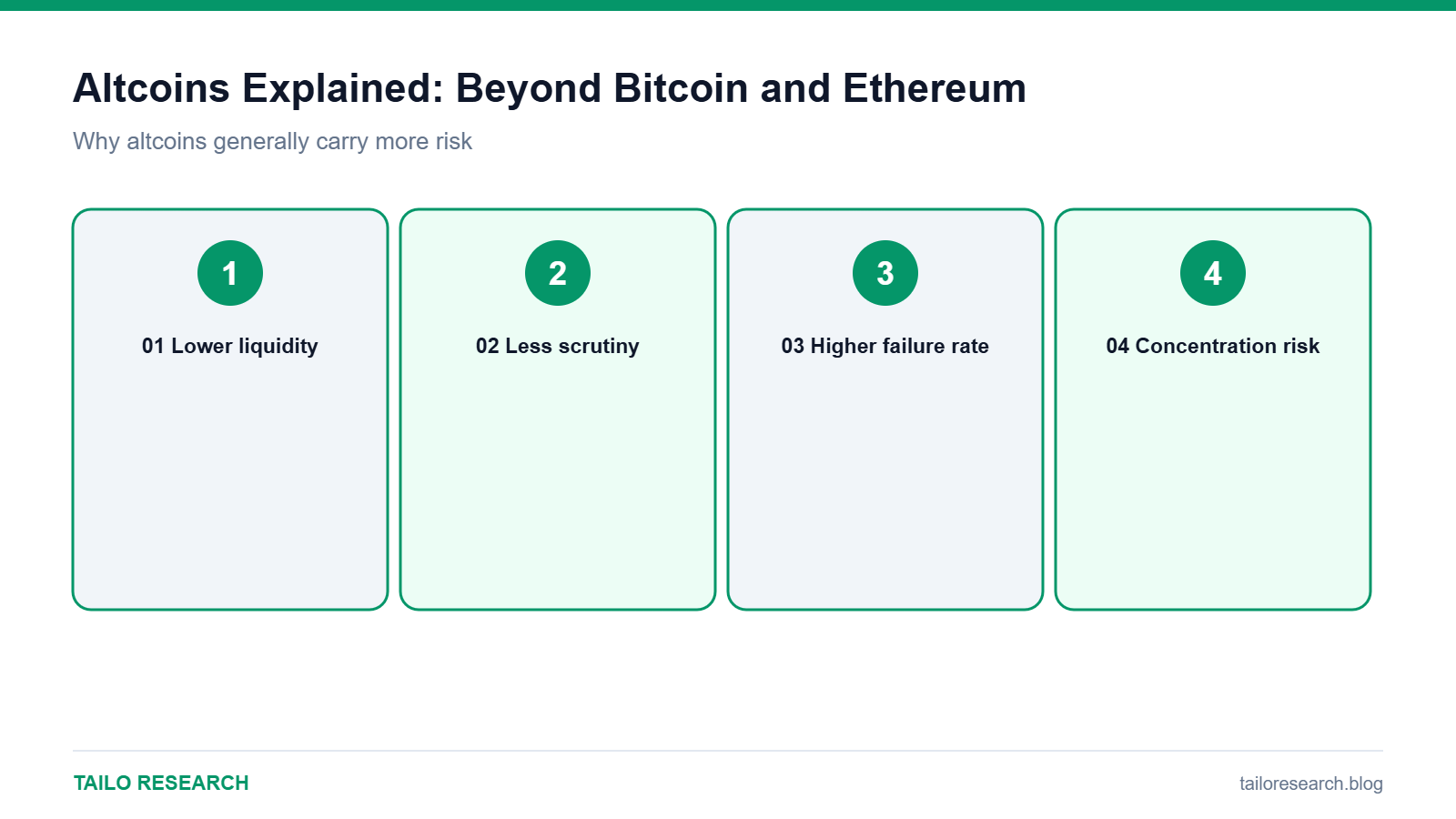
- Lower liquidity: smaller trading volumes than Bitcoin or Ethereum, meaning larger price swings on the same order size
- Less scrutiny: fewer institutions and analysts covering smaller projects
- Higher failure rate: many altcoins from past cycles have lost most or all of their value
- Concentration risk: ownership is sometimes concentrated among a small number of wallets
A framework for evaluating an altcoin
- What specific problem does it claim to solve, and does a real, working product exist?
- How is the token actually used within its own ecosystem?
- Who holds the majority of tokens, and when do early investors’ tokens unlock?
- How does it compare to the risk and liquidity of simply holding Bitcoin or Ethereum?
Key takeaways
- Altcoins span smart-contract platforms, payment coins, utility tokens and meme coins.
- They generally carry more liquidity and project-specific risk than Bitcoin or Ethereum.
- Check token unlock schedules and real product usage before treating any altcoin as a serious investment.
Want to trade what you read here as a CFD alongside TradingView charts? Open a Vantage account. This is an affiliate link: we may earn a commission at no extra charge from us. CFDs are complex instruments and carry a high risk of losing money rapidly due to leverage; most retail accounts lose money.
Educational content only, not investment advice. Trading and investing involve risk, including the loss of your capital. Read our Risk Disclaimer and Affiliate Disclosure.


Leave a Reply