

Short selling lets traders profit when a stock’s price falls, but the mechanics and risks are different, and less forgiving, than buying a stock outright. This guide explains how it works.
The mechanics
- You borrow shares you do not own, typically through your broker
- You sell those borrowed shares at the current market price
- Later, you buy the same number of shares back (hopefully at a lower price) to return them
- Your profit is the difference between the sale price and the buyback price, minus borrowing costs
Why short-selling risk is different
When you buy a stock, the most you can lose is your initial investment, since a price cannot fall below zero. When you short a stock, there is no upper limit on how high the price can rise, which means your potential loss is theoretically unlimited.
What a short squeeze is
If a heavily shorted stock’s price starts rising, short sellers may be forced to buy back shares to limit their losses, and that buying itself pushes the price higher, forcing more short sellers to buy, in a self-reinforcing cycle known as a short squeeze.
Costs beyond the trade itself
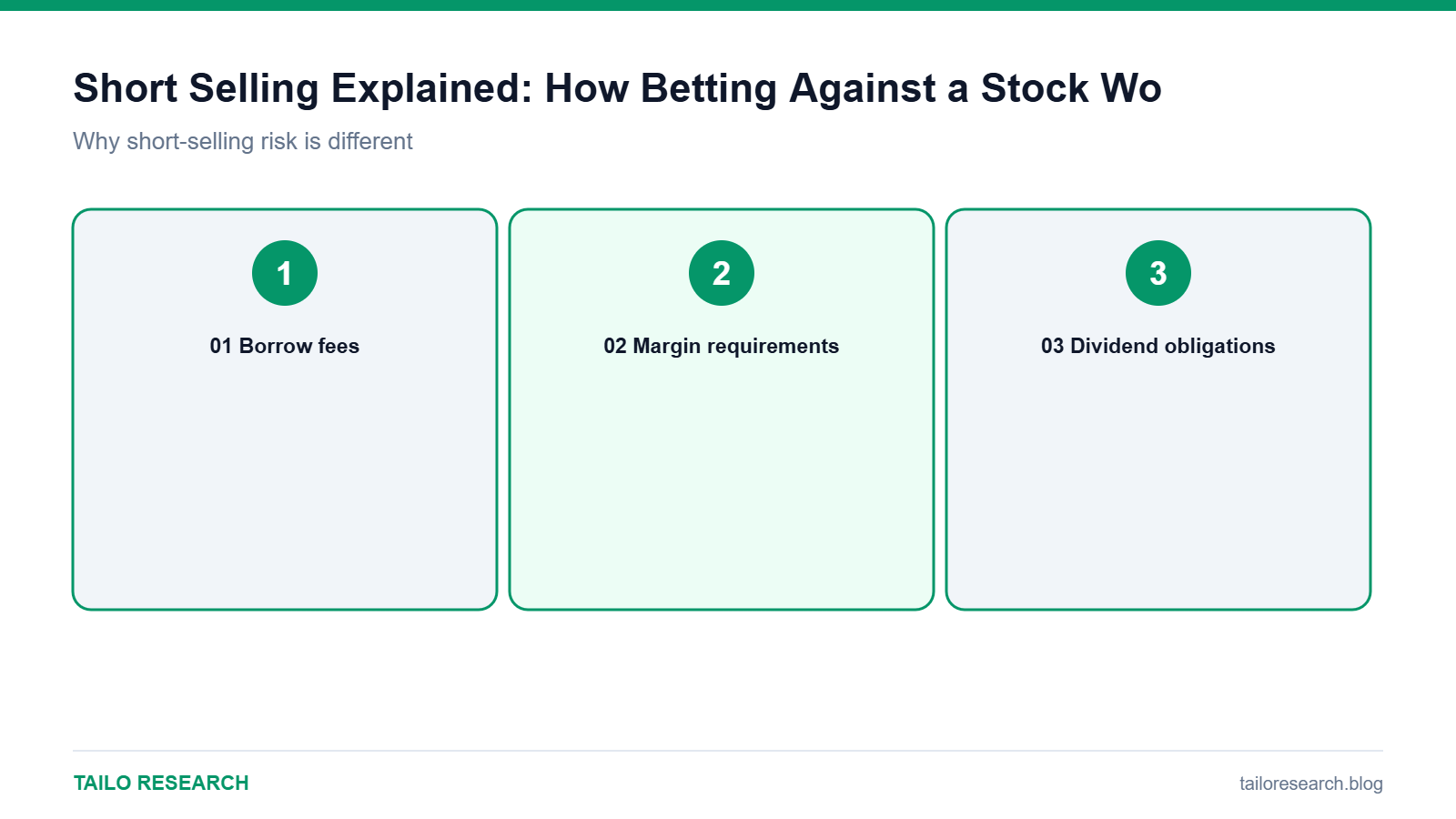
- Borrow fees: the cost of borrowing shares, which rises sharply for heavily shorted stocks
- Margin requirements: short selling requires a margin account with its own equity requirements
- Dividend obligations: if the shorted stock pays a dividend, the short seller typically owes that amount to the lender
Key takeaways
- Short selling profits from a falling price but carries theoretically unlimited risk.
- A short squeeze happens when rising prices force short sellers to buy back shares, accelerating the rally.
- Borrow fees and margin requirements add real costs beyond the trade itself.
Want to trade what you read here as a CFD alongside TradingView charts? Open a Vantage account. This is an affiliate link: we may earn a commission at no extra charge from us. CFDs are complex instruments and carry a high risk of losing money rapidly due to leverage; most retail accounts lose money.
Educational content only, not investment advice. Trading and investing involve risk, including the loss of your capital. Read our Risk Disclaimer and Affiliate Disclosure.


Leave a Reply