


Free cash flow (FCF) measures the actual cash a company generates after covering the costs needed to maintain and grow its operations. Many experienced investors consider it more reliable than net income, which can be shaped by accounting choices.
The formula
Free cash flow = Operating cash flow — capital expenditures. Operating cash flow comes from the cash flow statement, not the income statement, and capital expenditures are the money spent on property, equipment and other long-term investments.
Why FCF can differ from net income
Net income includes non-cash items like depreciation and can be affected by accounting choices such as when revenue is recognized. Free cash flow strips much of this out, focusing on cash that actually moved. A company can show positive net income while burning cash, or vice versa.
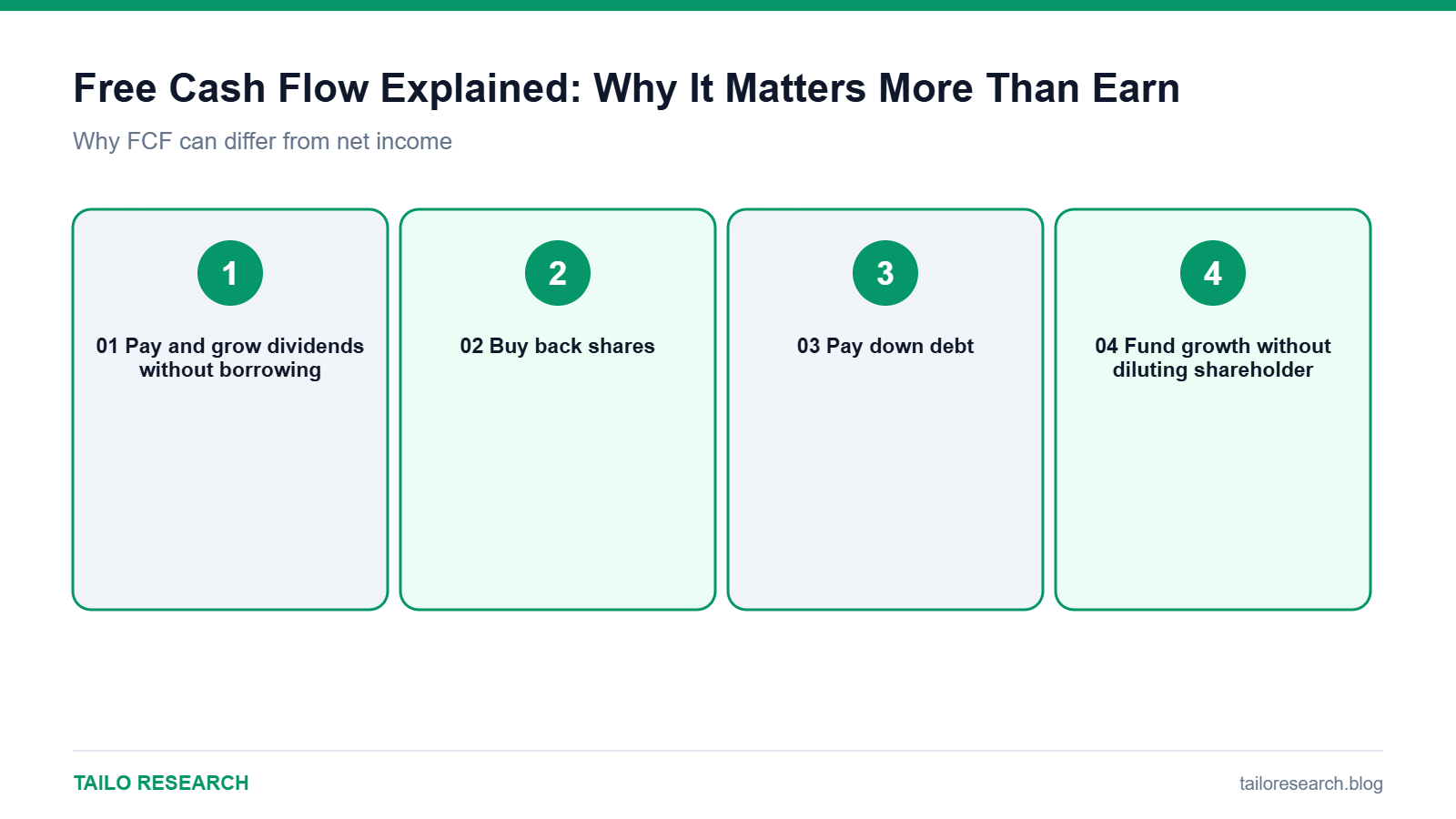
What strong free cash flow allows a company to do
- Pay and grow dividends without borrowing
- Buy back shares
- Pay down debt
- Fund growth without diluting shareholders through new stock issuance
Key takeaways
- Free cash flow measures actual cash generated after necessary capital spending.
- It is harder to manipulate through accounting choices than net income.
- Strong, growing free cash flow generally signals a healthier underlying business.
Want to trade what you read here as a CFD alongside TradingView charts? Open a Vantage account. This is an affiliate link: we may earn a commission at no extra charge from us. CFDs are complex instruments and carry a high risk of losing money rapidly due to leverage; most retail accounts lose money.
Educational content only, not investment advice. Trading and investing involve risk, including the loss of your capital. Read our Risk Disclaimer and Affiliate Disclosure.


Leave a Reply