

Small-cap ETFs, such as IWM tracking the Russell 2000, give exposure to smaller companies that large indices like the S&P 500 largely exclude. This guide covers how they differ from large-cap investing.
What counts as small-cap
Small-cap generally refers to companies with a market capitalization roughly between $300 million and $2 billion, though the exact range varies by index provider. These are meaningfully smaller than the mega-cap names that dominate the S&P 500.
Why small caps behave differently
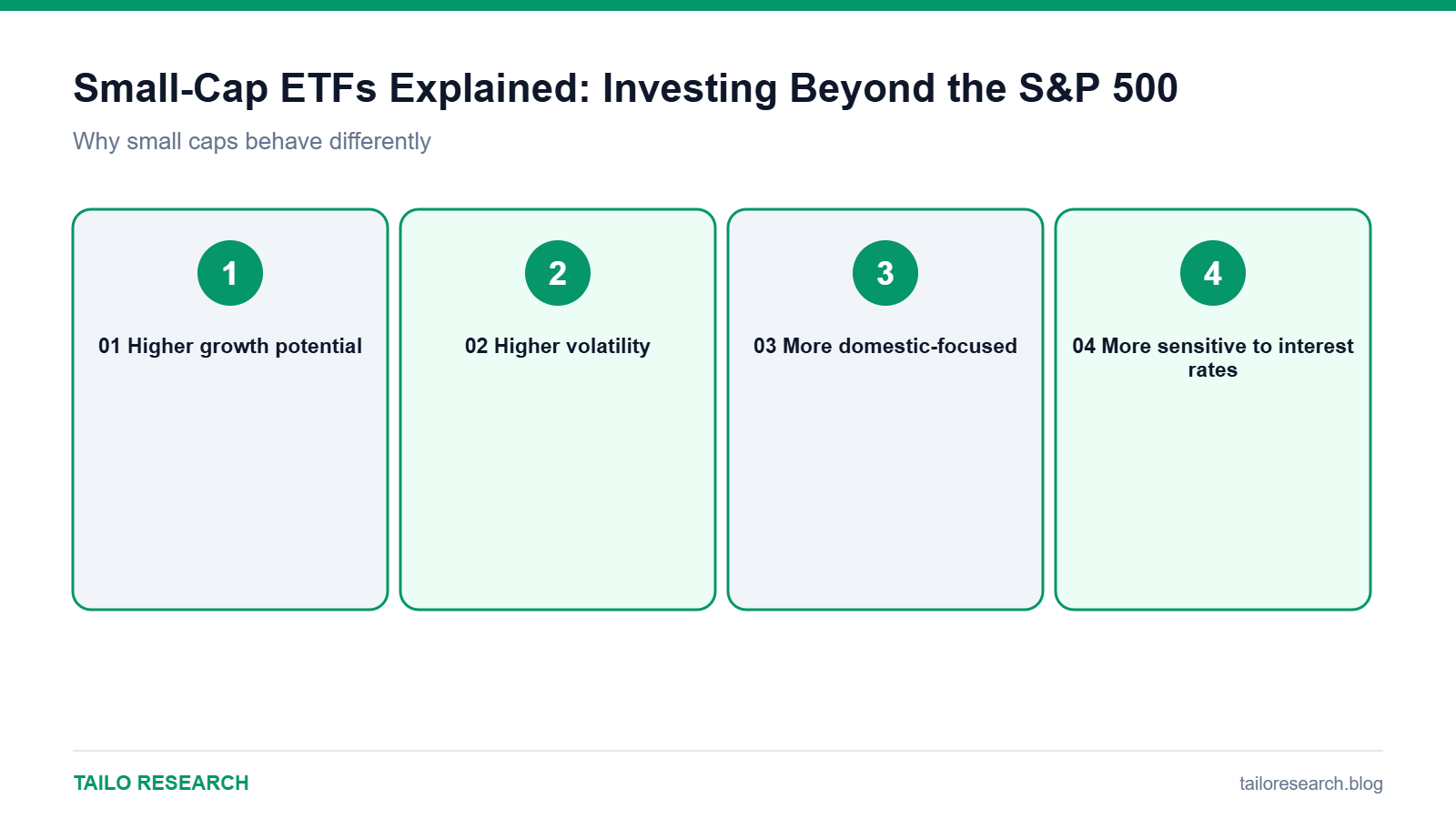
- Higher growth potential: smaller companies have more room to grow than already-massive ones
- Higher volatility: less analyst coverage and thinner trading can mean bigger price swings
- More domestic-focused: small caps often derive more revenue from the local economy than multinational large caps
- More sensitive to interest rates: smaller companies often carry more debt relative to size and borrow at less favorable terms
Small-cap vs large-cap in different environments
Small caps have historically outperformed large caps over some long periods, compensating investors for the added risk, but they have also gone through extended stretches of underperformance, particularly when interest rates are high or the economy is slowing.
Key takeaways
- Small-cap ETFs like IWM track smaller companies than the S&P 500.
- They typically carry more volatility and interest-rate sensitivity than large caps.
- They can add diversification to a portfolio otherwise concentrated in mega-cap stocks.
Want to trade what you read here as a CFD alongside TradingView charts? Open a Vantage account. This is an affiliate link: we may earn a commission at no extra charge from us. CFDs are complex instruments and carry a high risk of losing money rapidly due to leverage; most retail accounts lose money.
Educational content only, not investment advice. Trading and investing involve risk, including the loss of your capital. Read our Risk Disclaimer and Affiliate Disclosure.


Leave a Reply