

Spot crypto ETFs, first approved for Bitcoin in the US in January 2024 and for Ethereum later that year, let investors gain exposure to crypto prices through an ordinary brokerage account, without managing a crypto wallet.
How a spot crypto ETF works
A spot crypto ETF holds the actual underlying cryptocurrency (not futures contracts) in custody, and its share price tracks the crypto’s market price. You buy and sell shares like any other ETF, during normal stock market hours.
Spot crypto ETF vs owning crypto directly
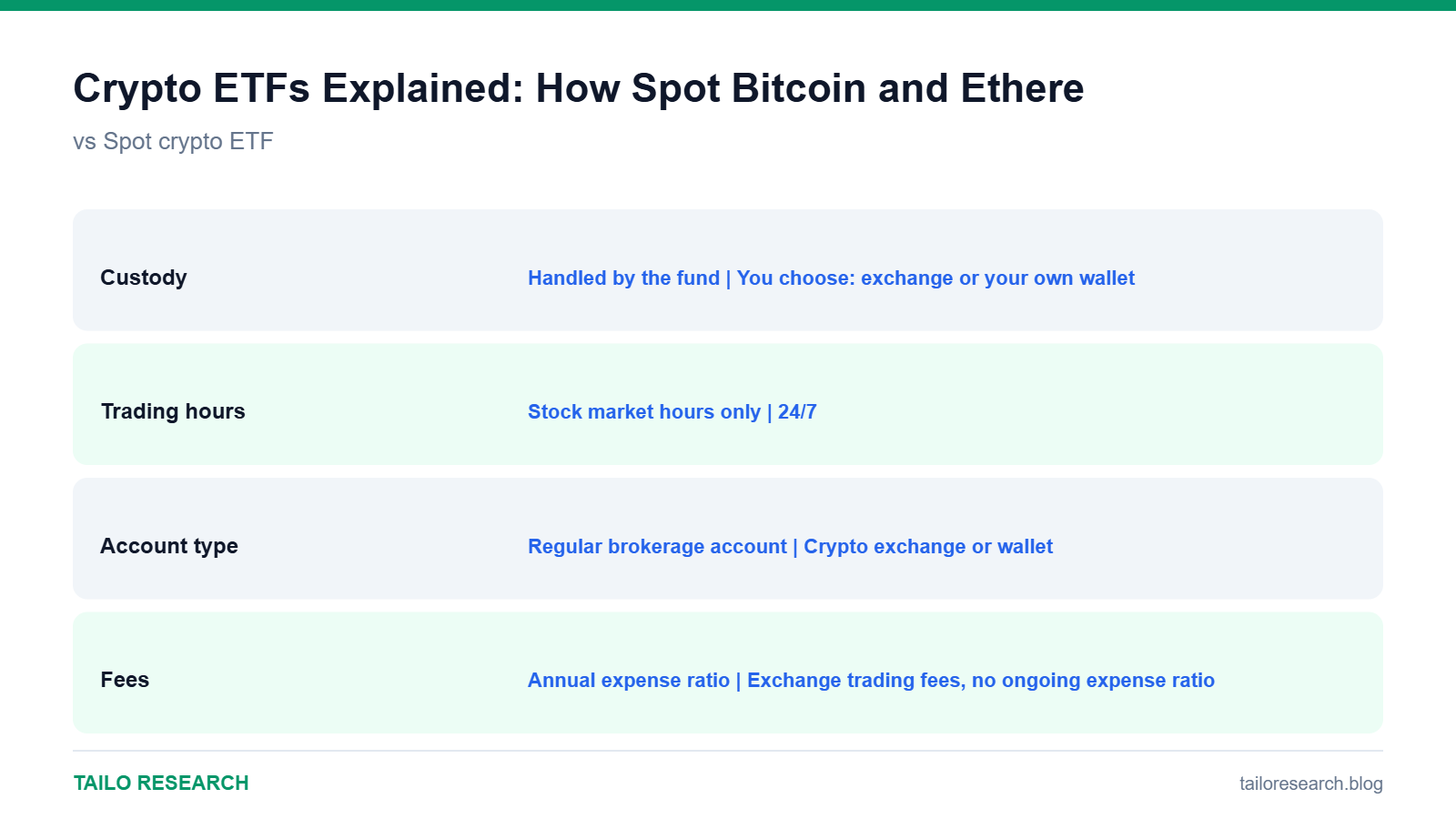
| Spot crypto ETF | Owning crypto directly | |
|---|---|---|
| Custody | Handled by the fund | You choose: exchange or your own wallet |
| Trading hours | Stock market hours only | 24/7 |
| Account type | Regular brokerage account | Crypto exchange or wallet |
| Fees | Annual expense ratio | Exchange trading fees, no ongoing expense ratio |
Why some investors prefer the ETF wrapper
- No need to manage private keys or wallet security
- Fits inside existing retirement or brokerage accounts in some jurisdictions
- Familiar regulatory and tax reporting framework
The trade-off
You give up 24/7 trading and direct ownership, and you pay an ongoing expense ratio instead of a one-time exchange fee. For investors who specifically want to use crypto (for payments, staking or DeFi), direct ownership remains necessary.
Key takeaways
- Spot crypto ETFs hold actual Bitcoin or Ethereum and trade through normal brokerage accounts.
- They trade only during stock market hours, unlike crypto exchanges.
- They suit investors who want price exposure without managing custody directly.
Want to trade what you read here as a CFD alongside TradingView charts? Open a Vantage account. This is an affiliate link: we may earn a commission at no extra charge from us. CFDs are complex instruments and carry a high risk of losing money rapidly due to leverage; most retail accounts lose money.
Educational content only, not investment advice. Trading and investing involve risk, including the loss of your capital. Read our Risk Disclaimer and Affiliate Disclosure.


Leave a Reply