

Covered call ETFs have grown popular for their high, often double-digit, yields. This guide explains the strategy behind them and what that yield actually costs you.
How the strategy works
A covered call ETF holds a basket of stocks (often tracking an index like the S&P 500 or Nasdaq-100) and sells call options against those holdings. The premium collected from selling the options is distributed to shareholders as income, on top of any dividends the underlying stocks pay.
The trade-off: capped upside
Selling call options generates income, but it also caps how much the fund can gain if the underlying stocks rally sharply, since the fund may be obligated to sell shares at the option’s strike price. In strong bull markets, covered call ETFs typically underperform simply owning the underlying index.
When covered call ETFs tend to do best
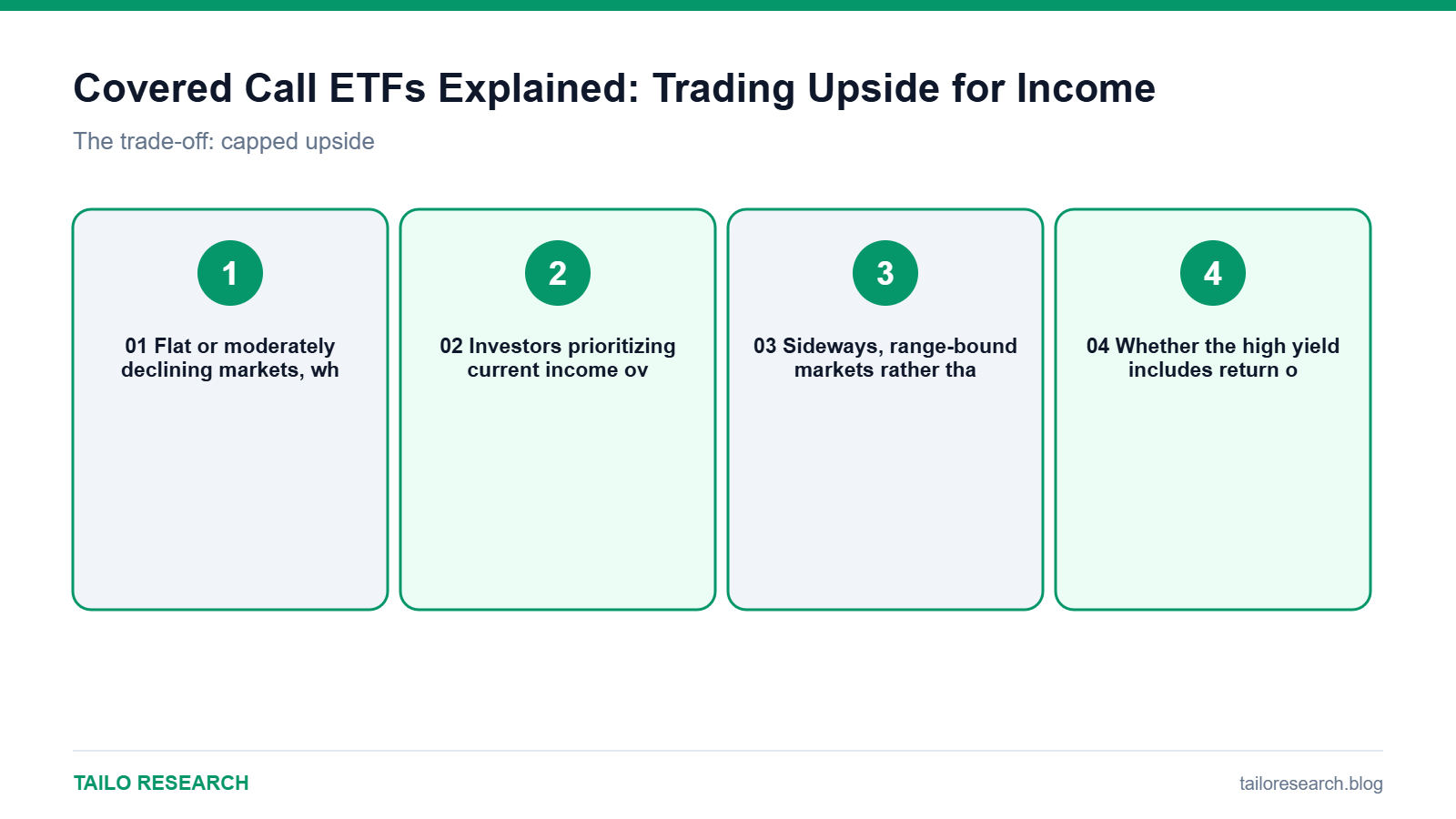
- Flat or moderately declining markets, where the option premium cushions losses
- Investors prioritizing current income over long-term growth
- Sideways, range-bound markets rather than strong trending ones
What to check before buying
- Whether the high yield includes return of capital, not just income
- How the fund has performed relative to simply owning the underlying index over a full market cycle
- The expense ratio, which tends to be higher than plain index ETFs
Key takeaways
- Covered call ETFs generate income by selling options against their holdings.
- That income comes at the cost of capped upside in strong bull markets.
- They tend to work best in flat or moderately declining markets, not strong rallies.
Want to trade what you read here as a CFD alongside TradingView charts? Open a Vantage account. This is an affiliate link: we may earn a commission at no extra charge from us. CFDs are complex instruments and carry a high risk of losing money rapidly due to leverage; most retail accounts lose money.
Educational content only, not investment advice. Trading and investing involve risk, including the loss of your capital. Read our Risk Disclaimer and Affiliate Disclosure.


Leave a Reply