

Treasury futures let traders speculate on or hedge against moves in US government bond yields, without owning the underlying bonds directly. This guide covers the basics.
What Treasury futures track
Treasury futures are priced against specific maturities of US government debt: 2-year, 5-year, 10-year and 30-year (the long bond). Prices move inversely to yields: when yields rise, Treasury futures prices fall, and vice versa.
Why traders use them
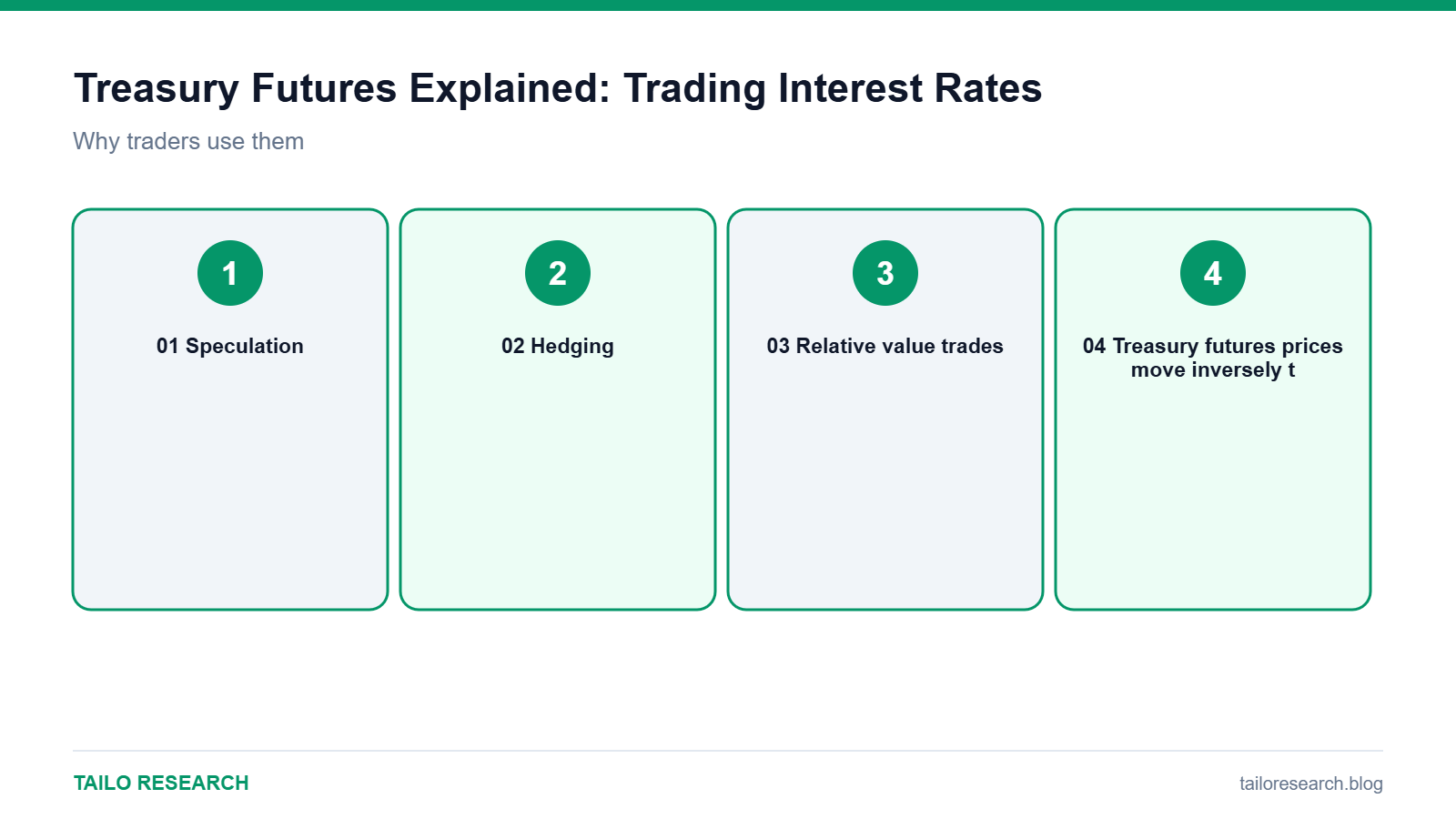
- Speculation: expressing a view on where interest rates are headed
- Hedging: portfolio managers use them to offset interest-rate risk in bond holdings
- Relative value trades: trading the yield curve by combining different maturities
How Fed policy connects
Treasury futures react directly to Fed rate decisions and to the economic data, like CPI and jobs reports, that shape expectations for future Fed moves. See our guide to how economic data moves markets for the broader context.
A note on complexity
Treasury futures pricing (quoted in 32nds of a point) and delivery mechanics are more complex than equity index futures. Beginners often start with equity index futures before moving into rates products.
Key takeaways
- Treasury futures prices move inversely to bond yields.
- They are used both for speculation and for hedging interest-rate risk.
- Pricing conventions are more complex than equity index futures, so build familiarity before trading them.
Want to trade what you read here as a CFD alongside TradingView charts? Open a Vantage account. This is an affiliate link: we may earn a commission at no extra charge from us. CFDs are complex instruments and carry a high risk of losing money rapidly due to leverage; most retail accounts lose money.
Educational content only, not investment advice. Trading and investing involve risk, including the loss of your capital. Read our Risk Disclaimer and Affiliate Disclosure.


Leave a Reply