


Sector ETFs let investors target a specific industry, such as technology or energy, rather than the broad market. This guide covers how they work and when they fit a portfolio.
What a sector ETF holds
A sector ETF holds companies from a single economic sector, commonly grouped using a standard classification system. Rather than the roughly 11 sectors of a broad index like the S&P 500, a sector ETF concentrates entirely in one of them.
Common sector ETFs
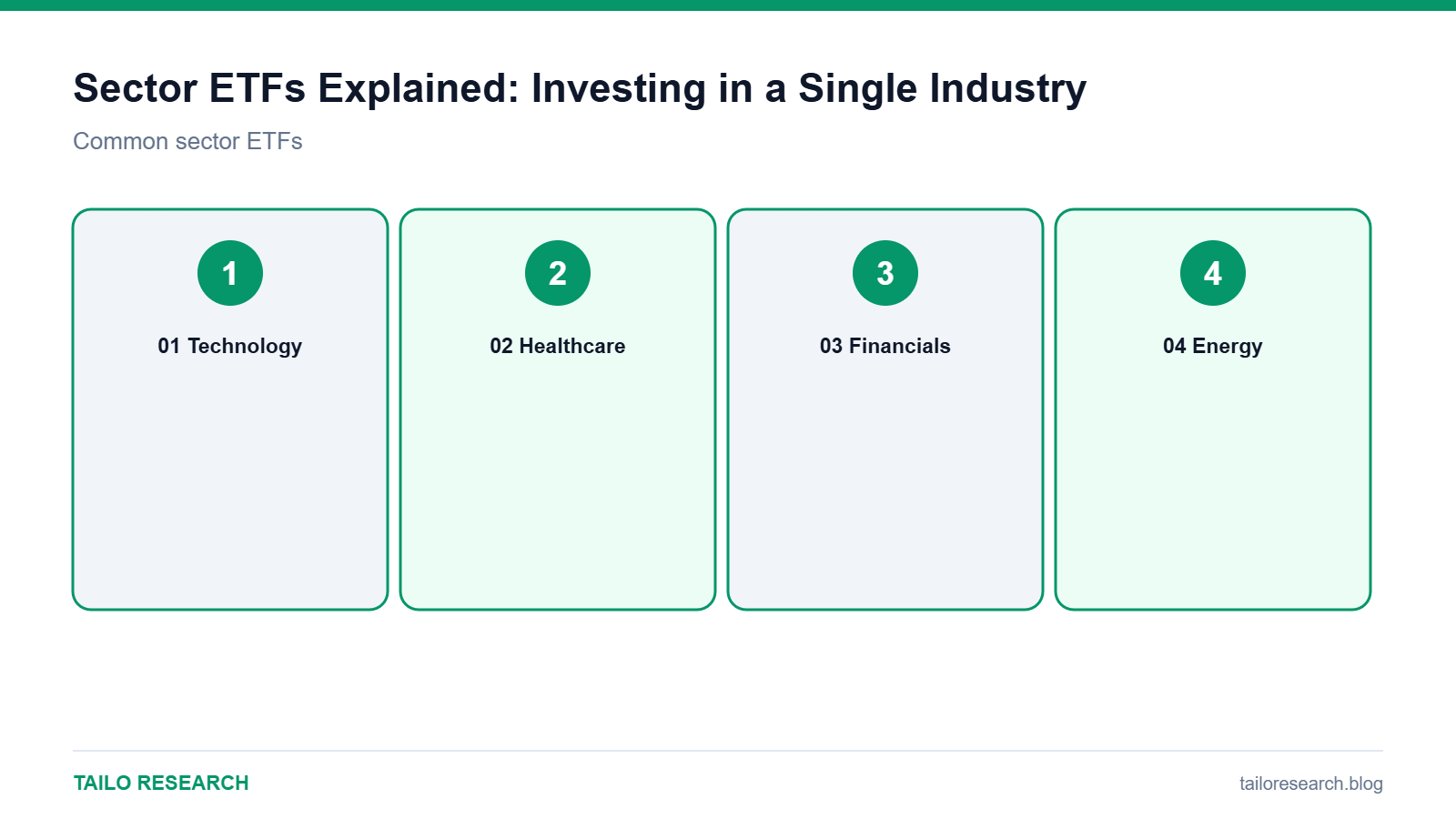
- Technology: software, hardware and semiconductor companies
- Healthcare: pharmaceuticals, biotech and medical device makers
- Financials: banks, insurers and asset managers
- Energy: oil, gas and increasingly renewable companies
- Utilities: often used as a defensive, lower-volatility holding
The trade-off: concentration risk
Sector ETFs sacrifice diversification for targeted exposure. If you believe a specific industry will outperform, a sector ETF captures that view more directly than a broad index fund, but it also means your returns depend heavily on that one sector’s fortunes.
How to use sector ETFs
Many investors use sector ETFs as a smaller, tactical addition on top of a diversified core holding, such as a broad-market ETF like VOO, rather than as the entire portfolio.
Key takeaways
- Sector ETFs concentrate in one industry instead of spreading across the whole market.
- They offer targeted exposure at the cost of diversification.
- Many investors use them as a smaller addition to a diversified core holding.
Want to trade what you read here as a CFD alongside TradingView charts? Open a Vantage account. This is an affiliate link: we may earn a commission at no extra charge from us. CFDs are complex instruments and carry a high risk of losing money rapidly due to leverage; most retail accounts lose money.
Educational content only, not investment advice. Trading and investing involve risk, including the loss of your capital. Read our Risk Disclaimer and Affiliate Disclosure.


Leave a Reply