

Natural gas futures (NG) are known among futures traders for sharp, often unpredictable volatility driven by weather and storage data. This guide covers the basics.
Contract specifications
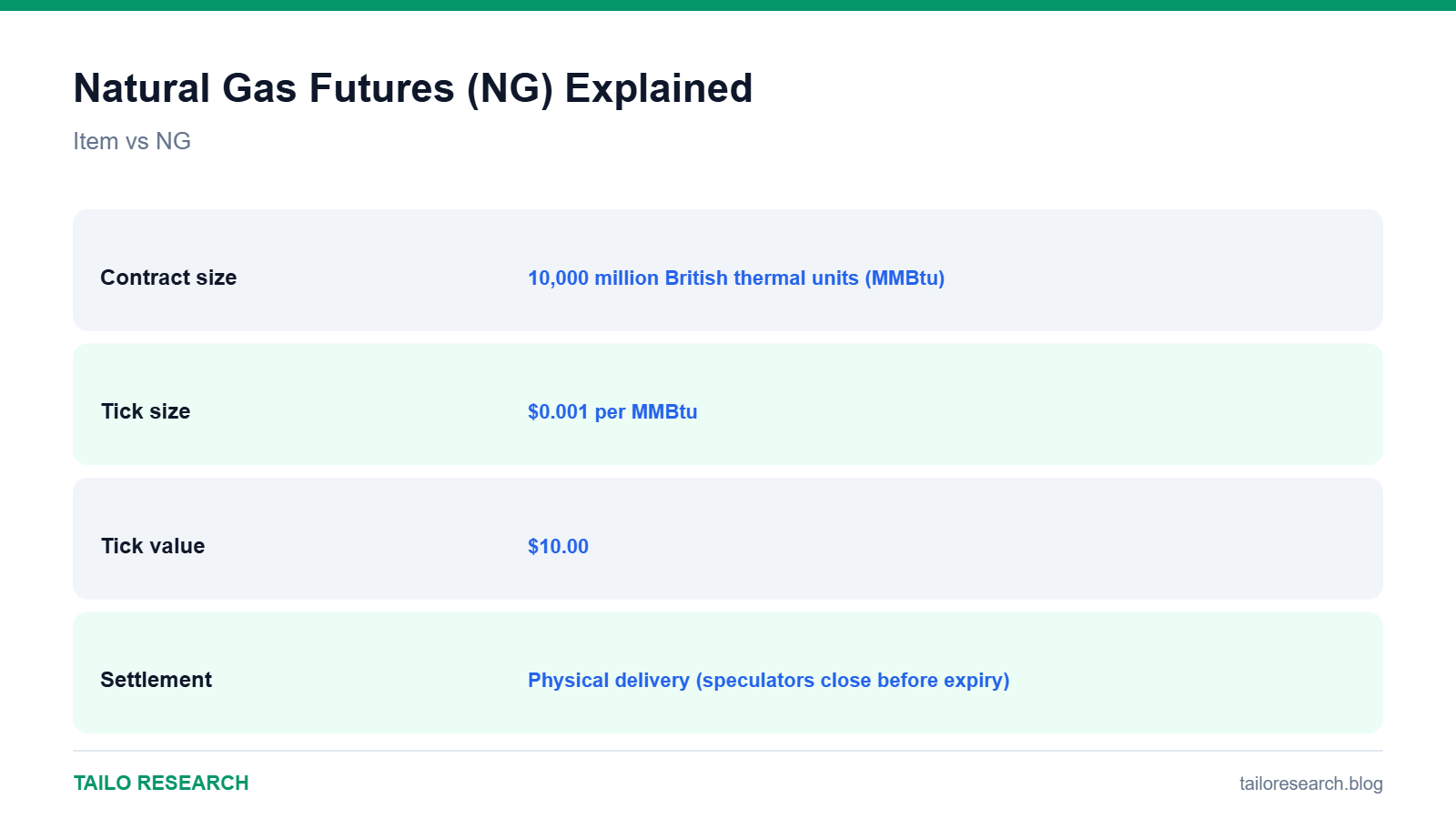
| Item | NG |
|---|---|
| Contract size | 10,000 million British thermal units (MMBtu) |
| Tick size | $0.001 per MMBtu |
| Tick value | $10.00 |
| Settlement | Physical delivery (speculators close before expiry) |
Why natural gas swings so hard
- Weather: unlike oil, gas demand is highly seasonal and directly tied to heating and cooling needs
- Storage reports: weekly EIA storage data (Thursdays) frequently triggers sharp, brief moves
- Limited storage flexibility: supply and demand can be more mismatched short-term than more easily stored commodities
Risk considerations
Natural gas is widely considered one of the more volatile major futures markets, which means position sizing discipline matters even more here than in calmer markets like index futures. Many traders use the micro contract (MNG) specifically to manage this volatility.
Key takeaways
- NG represents 10,000 MMBtu per contract, with a $10 tick value.
- Weekly storage reports and weather forecasts are the main volatility drivers.
- Its volatility makes disciplined position sizing especially important.
Want to trade what you read here as a CFD alongside TradingView charts? Open a Vantage account. This is an affiliate link: we may earn a commission at no extra charge from us. CFDs are complex instruments and carry a high risk of losing money rapidly due to leverage; most retail accounts lose money.
Educational content only, not investment advice. Trading and investing involve risk, including the loss of your capital. Read our Risk Disclaimer and Affiliate Disclosure.


Leave a Reply