

Futures and options are both derivatives, but they work fundamentally differently. This guide explains the core distinction and when each tends to fit better.
The core difference: obligation vs right
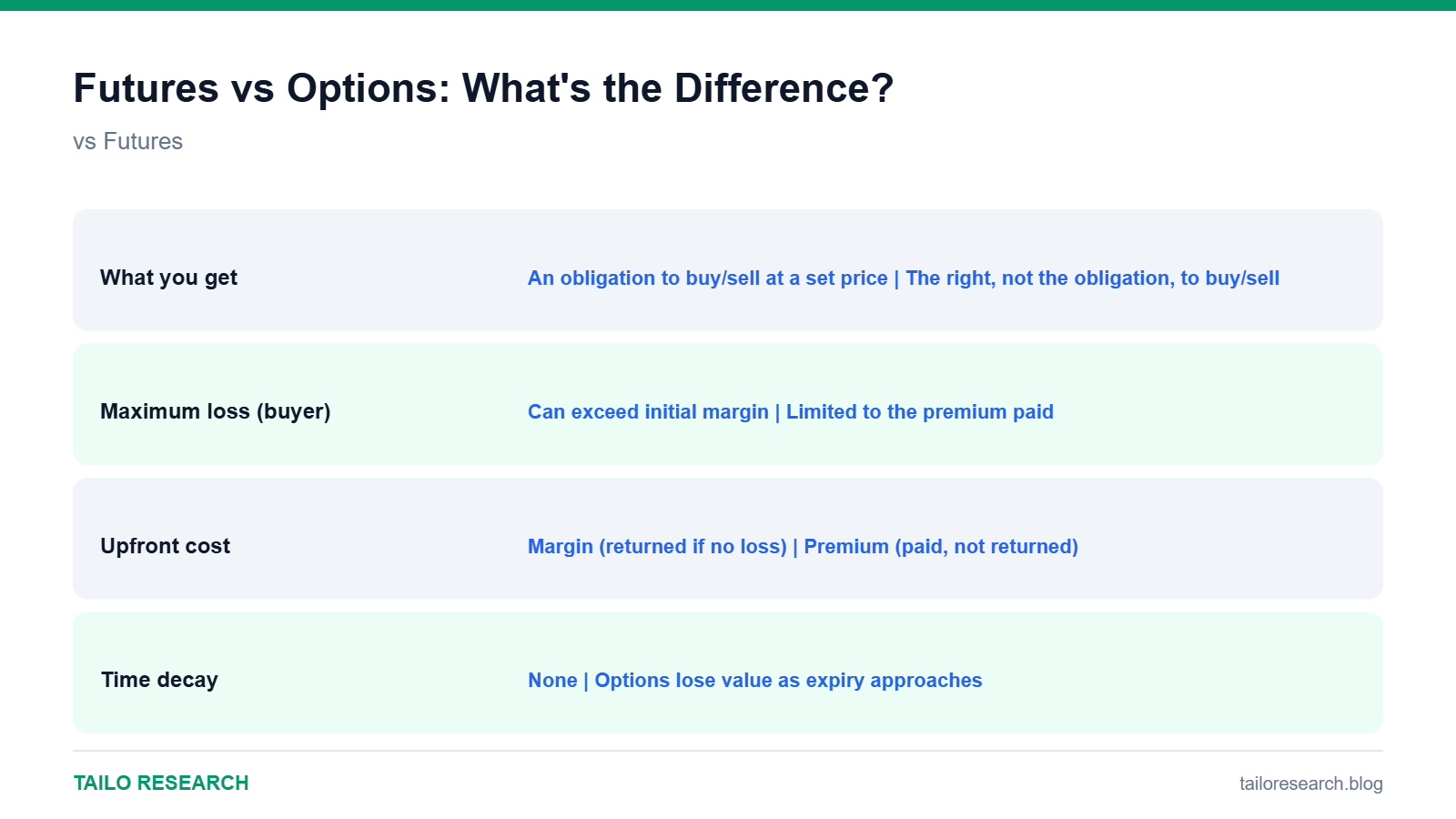
| Futures | Options | |
|---|---|---|
| What you get | An obligation to buy/sell at a set price | The right, not the obligation, to buy/sell |
| Maximum loss (buyer) | Can exceed initial margin | Limited to the premium paid |
| Upfront cost | Margin (returned if no loss) | Premium (paid, not returned) |
| Time decay | None | Options lose value as expiry approaches |
Why the difference matters
Buying an option caps your maximum loss at the premium paid, while a futures position can lose more than your initial margin if the market moves sharply against you. In exchange, options buyers pay a premium that erodes over time (time decay), even if the underlying price does not move.
When each tends to fit
- Futures: when you want direct, leveraged exposure and are comfortable actively managing risk with stops
- Options (buying): when you want defined, capped risk and are willing to pay a premium for that certainty
- Options (selling): an advanced strategy with its own distinct risk profile, generally not a beginner starting point
Key takeaways
- Futures create an obligation; options buyers get a right without an obligation.
- Options buyers have capped risk (the premium); futures traders do not, without a stop-loss.
- Options lose value over time even if the underlying price stays flat; futures do not.
Want to trade what you read here as a CFD alongside TradingView charts? Open a Vantage account. This is an affiliate link: we may earn a commission at no extra charge from us. CFDs are complex instruments and carry a high risk of losing money rapidly due to leverage; most retail accounts lose money.
Educational content only, not investment advice. Trading and investing involve risk, including the loss of your capital. Read our Risk Disclaimer and Affiliate Disclosure.


Leave a Reply