

Bond ETFs let investors hold a diversified basket of bonds through a single, exchange-traded fund, without buying individual bonds directly. This guide covers how they work and the main types.
How a bond ETF works
A bond ETF holds a portfolio of bonds, government or corporate, and pays out the interest (coupon) income to shareholders, typically monthly. Unlike an individual bond, a bond ETF has no fixed maturity date; instead, it continuously buys new bonds as older ones mature.
Main types of bond ETFs
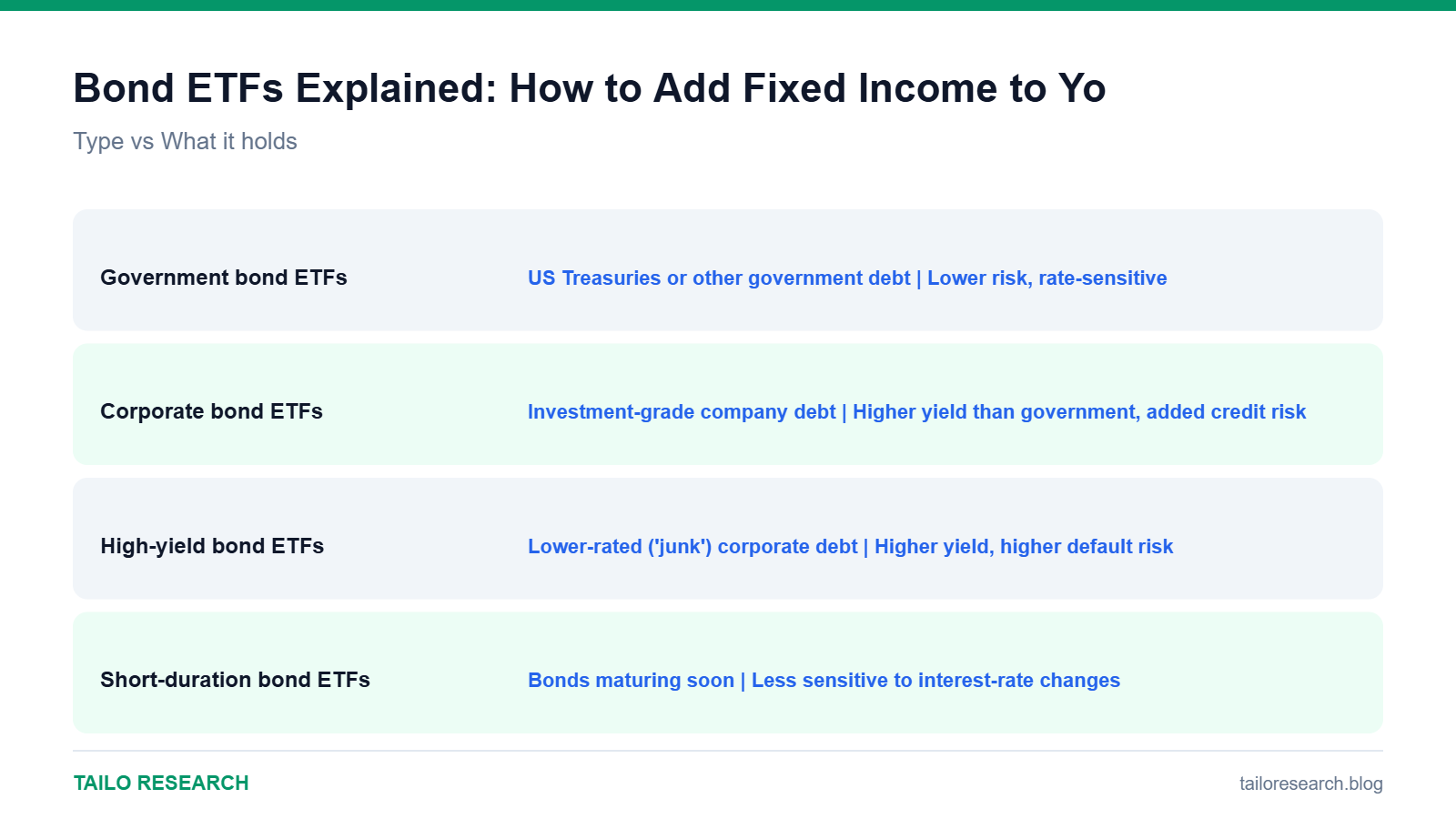
| Type | What it holds | Typical role |
|---|---|---|
| Government bond ETFs | US Treasuries or other government debt | Lower risk, rate-sensitive |
| Corporate bond ETFs | Investment-grade company debt | Higher yield than government, added credit risk |
| High-yield bond ETFs | Lower-rated (‘junk’) corporate debt | Higher yield, higher default risk |
| Short-duration bond ETFs | Bonds maturing soon | Less sensitive to interest-rate changes |
Why bond ETF prices move with interest rates
Bond prices move inversely to interest rates: when rates rise, existing bonds paying lower fixed rates become less attractive, so their prices fall, and bond ETF prices fall with them. Longer-duration bond ETFs are more sensitive to rate changes than shorter-duration ones.
Key takeaways
- Bond ETFs pay income like individual bonds but have no fixed maturity date.
- Government, corporate and high-yield bond ETFs carry different risk and yield trade-offs.
- Longer-duration bond ETFs are more sensitive to interest-rate changes than shorter-duration ones.
Want to trade what you read here as a CFD alongside TradingView charts? Open a Vantage account. This is an affiliate link: we may earn a commission at no extra charge from us. CFDs are complex instruments and carry a high risk of losing money rapidly due to leverage; most retail accounts lose money.
Educational content only, not investment advice. Trading and investing involve risk, including the loss of your capital. Read our Risk Disclaimer and Affiliate Disclosure.


Leave a Reply