

Silver futures give traders exposure to one of the most actively traded precious metals, known for higher volatility than gold relative to its price. This guide covers the contract basics.
Silver futures contract specs
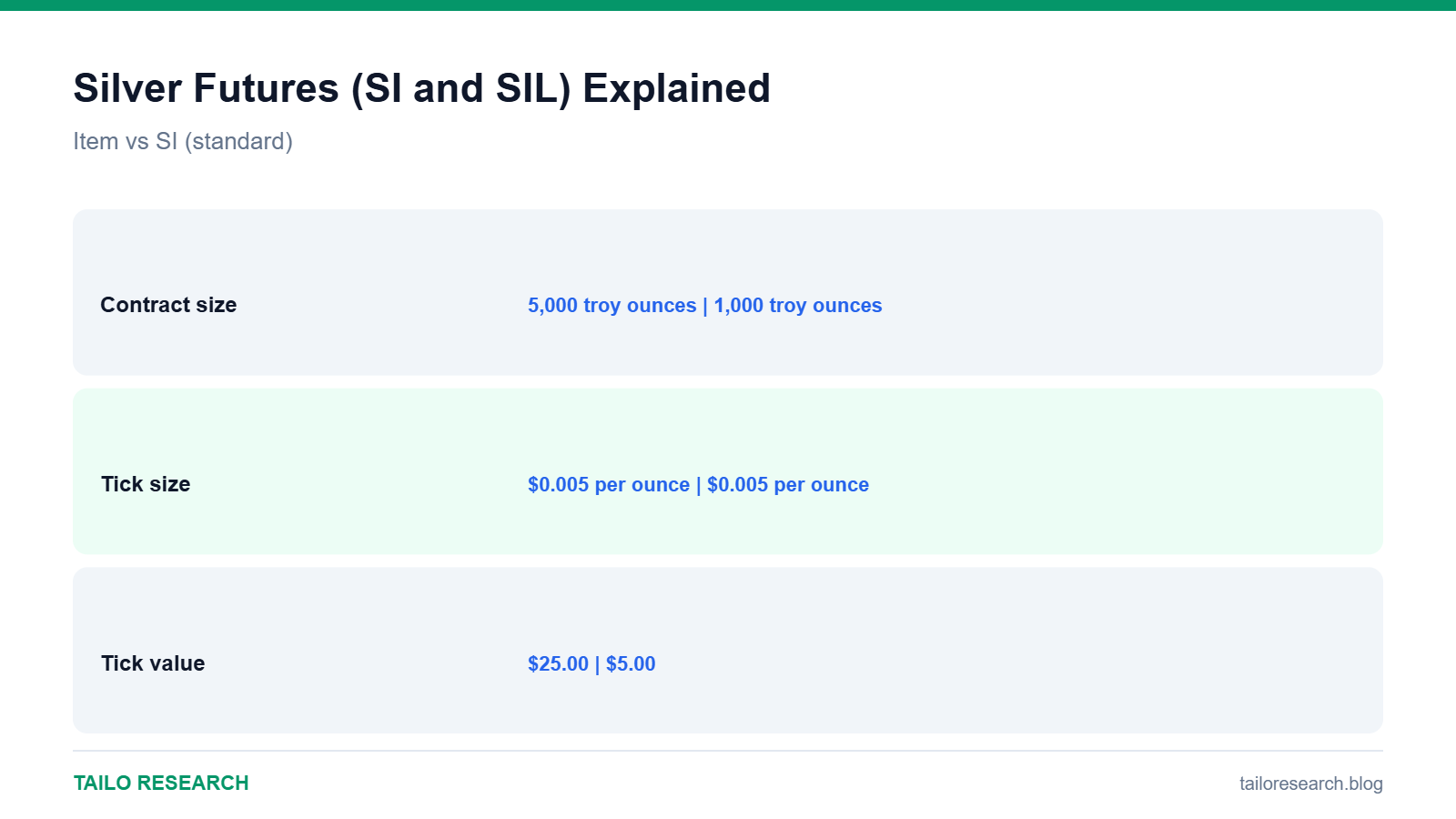
| Item | SI (standard) | SIL (micro) |
|---|---|---|
| Contract size | 5,000 troy ounces | 1,000 troy ounces |
| Tick size | $0.005 per ounce | $0.005 per ounce |
| Tick value | $25.00 | $5.00 |
Why silver is more volatile than gold
Silver has a smaller, less liquid market than gold and a dual role as both a precious metal and an industrial input (used in electronics and solar panels), which makes it react to both safe-haven demand and industrial demand cycles, often amplifying moves in either direction.
What moves silver prices
- Industrial demand, particularly from electronics and solar manufacturing
- Gold price moves, which silver often tracks with amplified swings
- The US dollar and real interest rates
- Mine supply and above-ground inventory levels
Key takeaways
- A standard silver contract (SI) represents 5,000 ounces; the micro (SIL) is 1,000 ounces.
- Silver combines precious-metal and industrial-demand drivers, adding to its volatility.
- Its tick value is meaningfully larger than gold’s on a per-contract basis, so size accordingly.
Want to trade what you read here as a CFD alongside TradingView charts? Open a Vantage account. This is an affiliate link: we may earn a commission at no extra charge from us. CFDs are complex instruments and carry a high risk of losing money rapidly due to leverage; most retail accounts lose money.
Educational content only, not investment advice. Trading and investing involve risk, including the loss of your capital. Read our Risk Disclaimer and Affiliate Disclosure.


Leave a Reply