

CME introduced micro futures to let traders access the same markets as full-size contracts at one-tenth (or smaller) the size. This guide explains why that matters and when to graduate to full-size.
The core difference
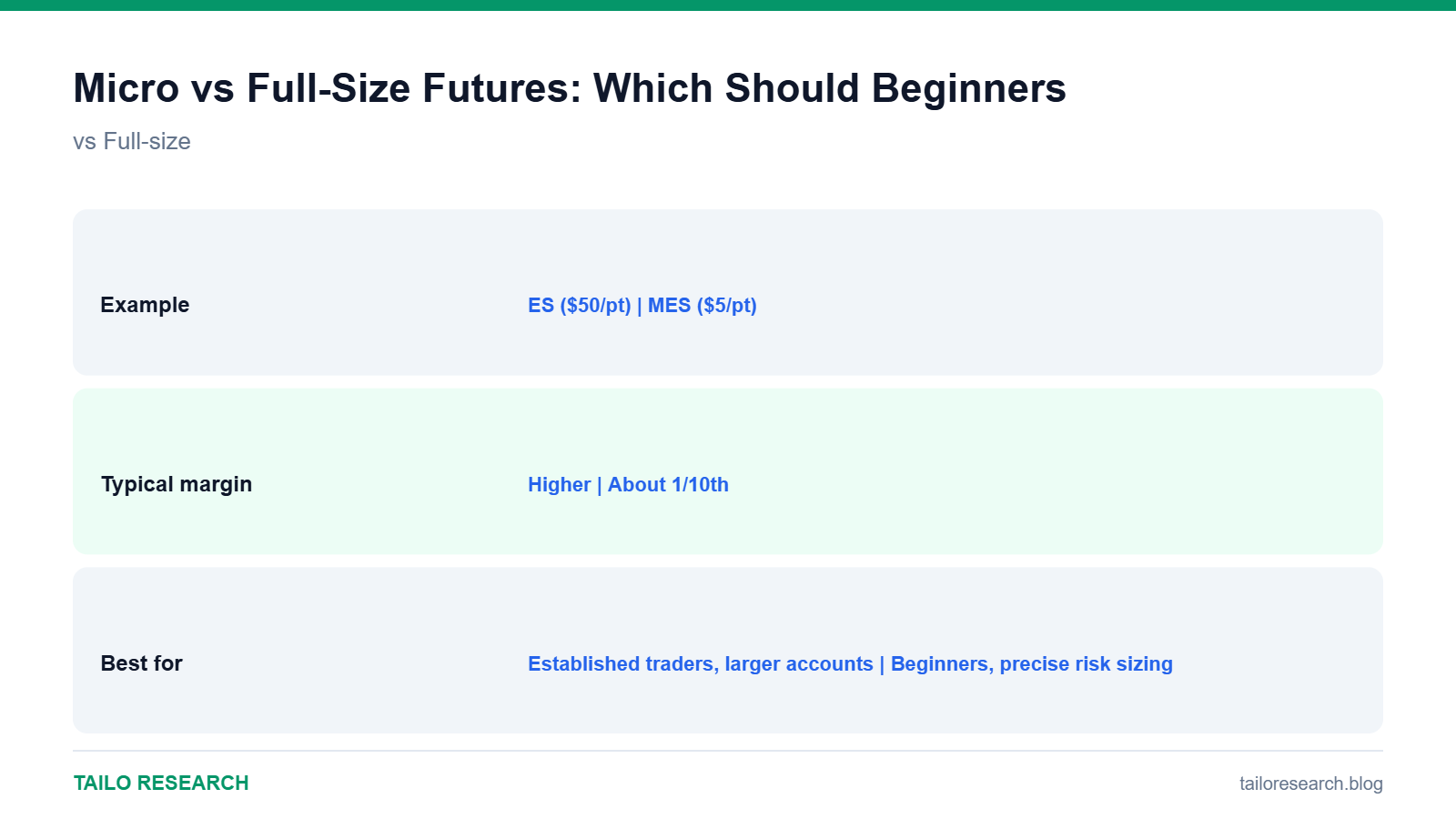
| Full-size | Micro | |
|---|---|---|
| Example | ES ($50/pt) | MES ($5/pt) |
| Typical margin | Higher | About 1/10th |
| Best for | Established traders, larger accounts | Beginners, precise risk sizing |
Why micros matter for risk management
A full-size contract can force position sizes that are too large for a small account, even with a tight stop. Micro contracts let you size a trade down to match your actual dollar risk, rather than rounding up because the smallest available size is still too big.
When to move to full-size
- Your account has grown enough that a single micro contract under-utilizes your risk budget
- You have a consistent, tested strategy over many trades
- You are comfortable with the dollar swings a full-size contract produces
Key takeaways
- Micro futures are typically one-tenth the size and margin of their full-size equivalent.
- They let you match position size to your actual risk budget, especially on smaller accounts.
- Move to full-size only once your account and strategy consistency justify it.
Want to trade what you read here as a CFD alongside TradingView charts? Open a Vantage account. This is an affiliate link: we may earn a commission at no extra charge from us. CFDs are complex instruments and carry a high risk of losing money rapidly due to leverage; most retail accounts lose money.
Educational content only, not investment advice. Trading and investing involve risk, including the loss of your capital. Read our Risk Disclaimer and Affiliate Disclosure.


Leave a Reply