


A margin call is one of the most feared events in leveraged trading, but understanding how it works removes most of the mystery. This guide explains the mechanics and how to avoid one.
Initial vs maintenance margin
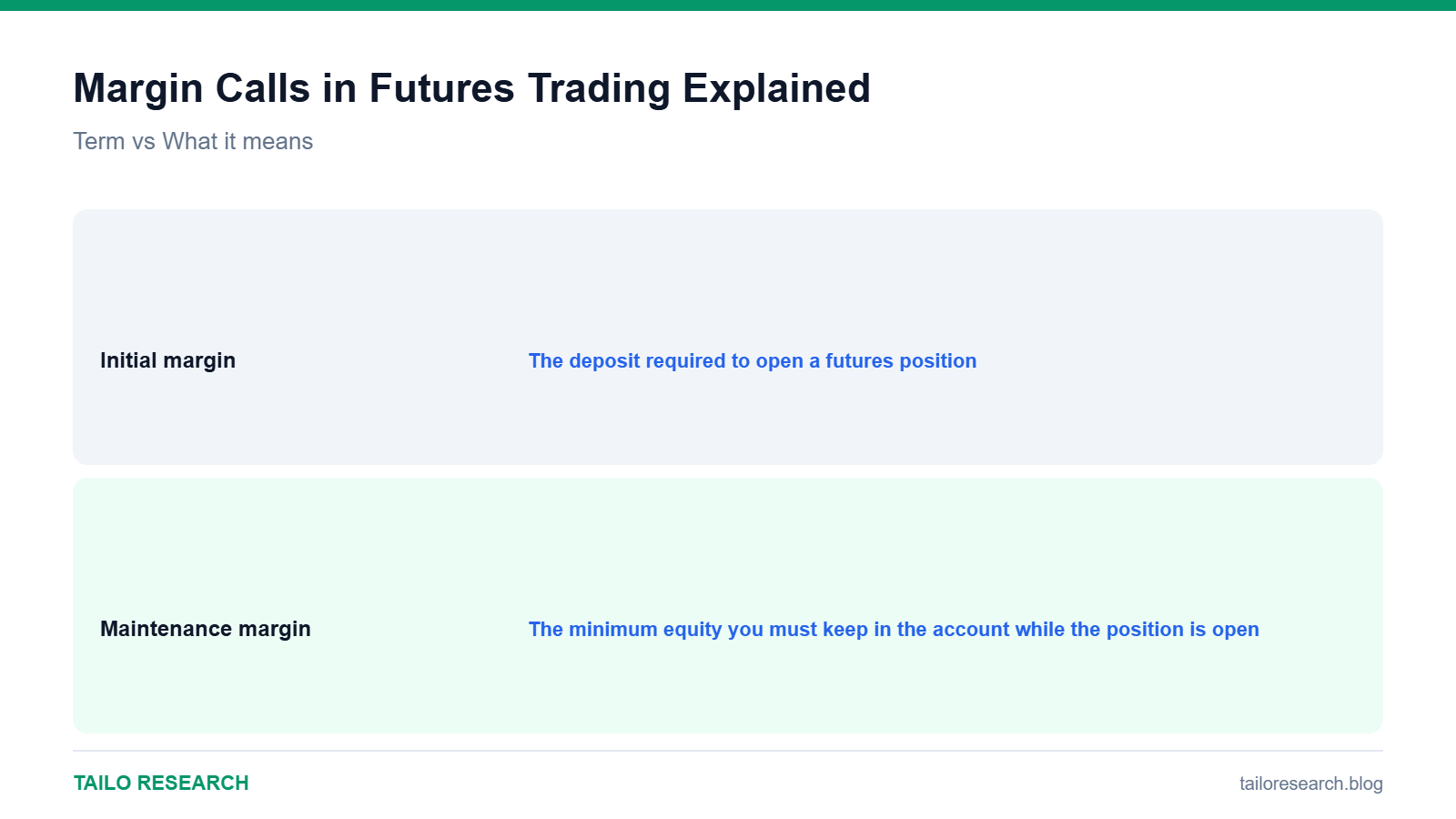
| Term | What it means |
|---|---|
| Initial margin | The deposit required to open a futures position |
| Maintenance margin | The minimum equity you must keep in the account while the position is open |
What triggers a margin call
If losses push your account equity below the maintenance margin level, your broker issues a margin call, a request to deposit more funds or reduce your position. If you do not respond, the broker can close positions automatically to bring your account back within limits, often at an unfavorable time.
How to avoid one
- Never use your full available margin on a single position
- Size positions from your stop-loss distance, not from how many contracts your margin allows
- Keep a cash buffer above the minimum required margin
- Monitor open positions especially around high-volatility events
Key takeaways
- A margin call happens when losses push your equity below the maintenance margin.
- Unanswered margin calls can result in forced position closures.
- Sizing from your stop distance, not your maximum margin, is the main way to avoid one.
Want to trade what you read here as a CFD alongside TradingView charts? Open a Vantage account. This is an affiliate link: we may earn a commission at no extra charge from us. CFDs are complex instruments and carry a high risk of losing money rapidly due to leverage; most retail accounts lose money.
Educational content only, not investment advice. Trading and investing involve risk, including the loss of your capital. Read our Risk Disclaimer and Affiliate Disclosure.


Leave a Reply