

Futures contracts are not indefinite: most index, commodity and rate futures expire on a set quarterly or monthly cycle. This guide explains what happens at expiry and how rolling works.
What expiry means
Each futures contract has a defined expiration date. For cash-settled contracts like ES, NQ and MNQ, expiry simply closes out open positions at a final settlement price; no physical delivery occurs. For physically-settled commodities like crude oil and gold, speculators must close or roll before delivery obligations begin.
What rolling means
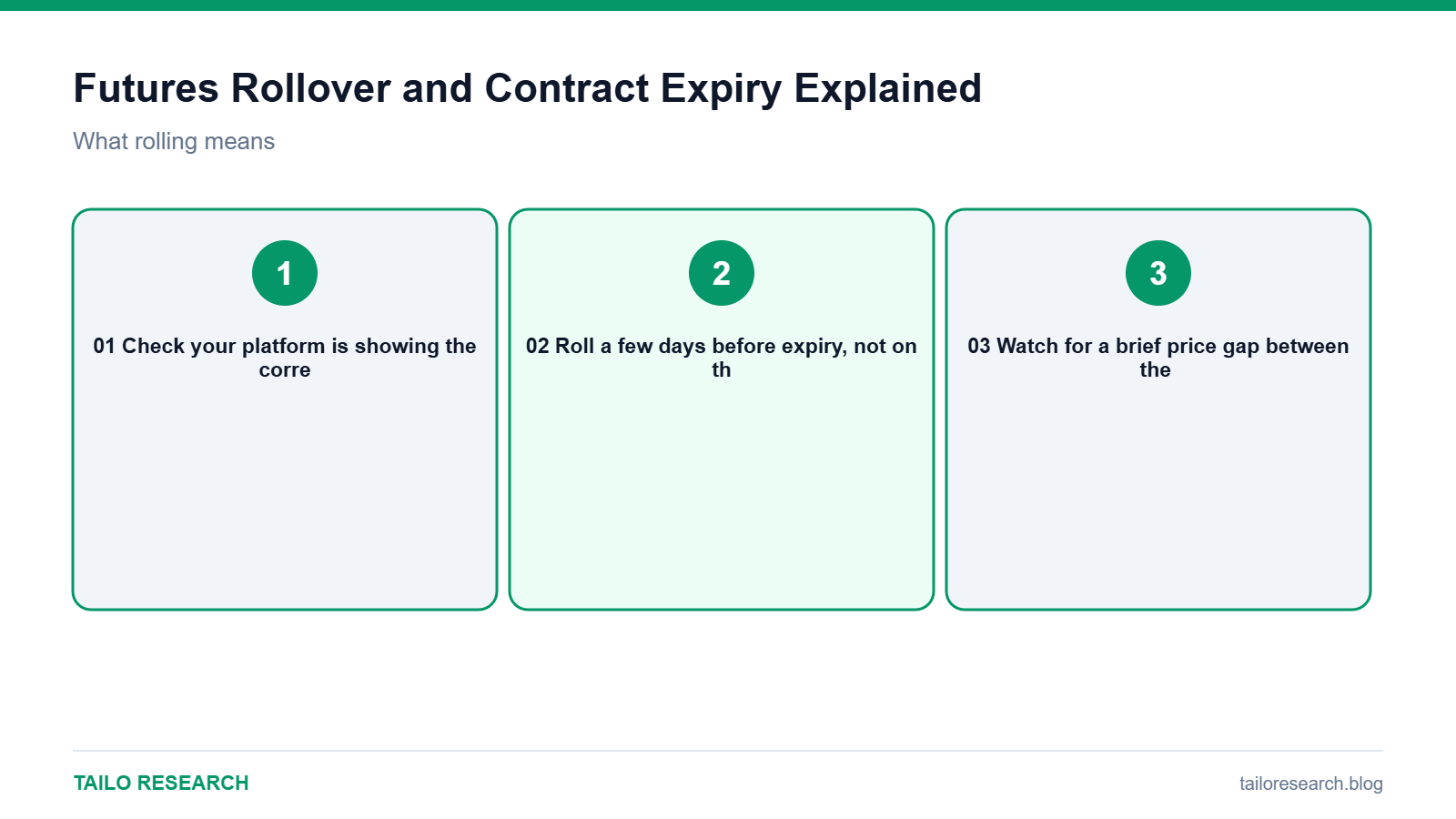
Rolling means closing your position in the expiring (front-month) contract and opening an equivalent position in the next contract month, to maintain continuous exposure without going through expiry itself.
Why liquidity shifts before expiry
In the days leading up to expiry, trading volume gradually shifts from the front-month contract to the next one. Trading an expiring contract too close to its final days can mean wider spreads and thinner liquidity, since most active participants have already rolled.
A simple rollover checklist
- Check your platform is showing the correct, most-liquid contract month
- Roll a few days before expiry, not on the final day
- Watch for a brief price gap between the old and new contract at rollover, especially in commodities
Key takeaways
- Index futures are cash-settled at expiry; commodities are physically settled unless closed or rolled first.
- Volume shifts to the next contract in the days before expiry.
- Roll a few days early to avoid thin liquidity in the expiring contract.
Want to trade what you read here as a CFD alongside TradingView charts? Open a Vantage account. This is an affiliate link: we may earn a commission at no extra charge from us. CFDs are complex instruments and carry a high risk of losing money rapidly due to leverage; most retail accounts lose money.
Educational content only, not investment advice. Trading and investing involve risk, including the loss of your capital. Read our Risk Disclaimer and Affiliate Disclosure.


Leave a Reply