

ES and NQ are the two most heavily traded US index futures, but they behave differently because of what they track. This guide compares them so you can pick the one that fits your style.
What each one tracks
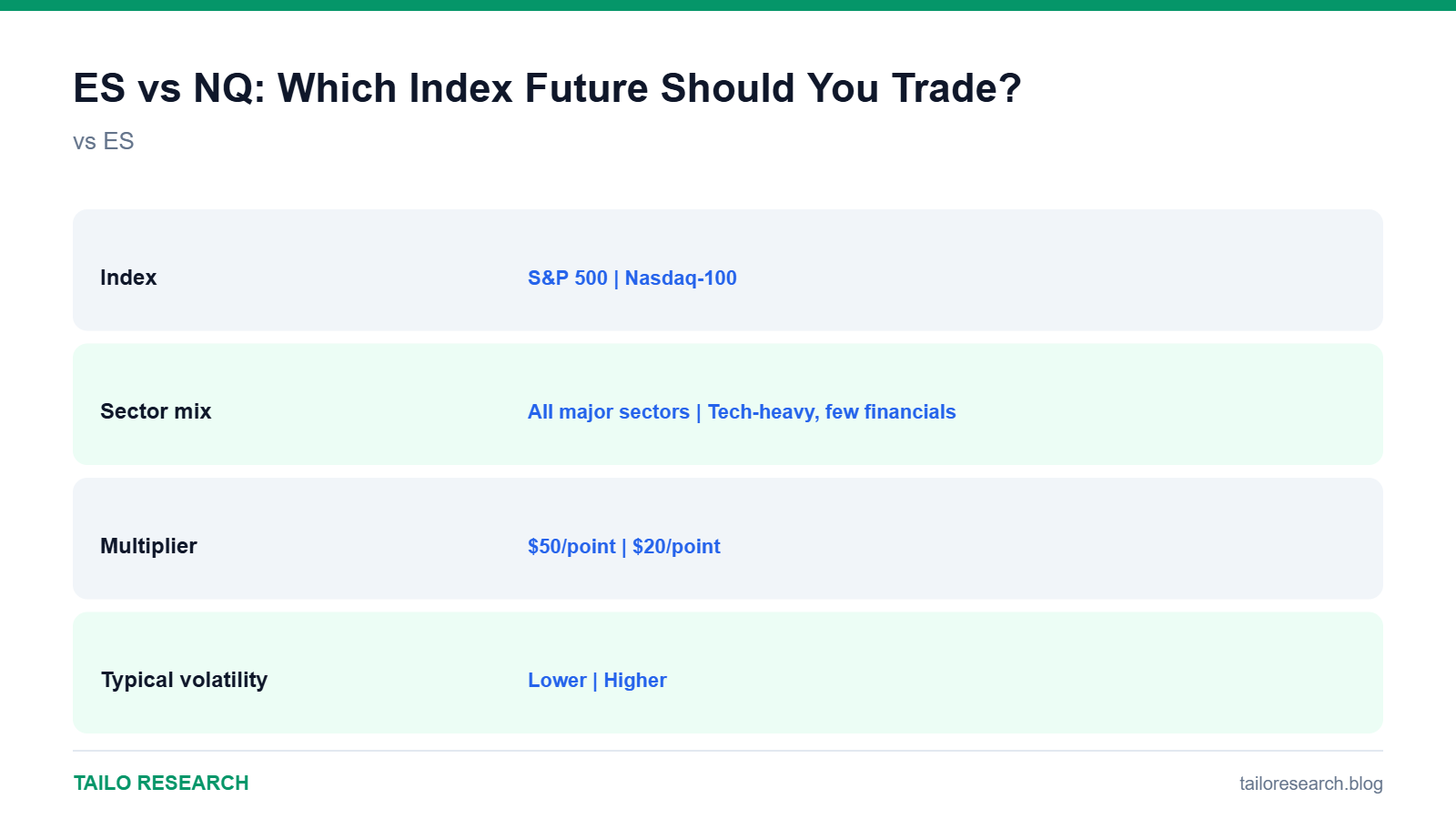
| ES | NQ | |
|---|---|---|
| Index | S&P 500 | Nasdaq-100 |
| Sector mix | All major sectors | Tech-heavy, few financials |
| Multiplier | $50/point | $20/point |
| Typical volatility | Lower | Higher |
Why NQ moves more
Because the Nasdaq-100 concentrates in technology and growth names, NQ tends to swing harder in both directions than the broadly diversified ES. That means larger potential gains, and larger potential losses, on the same dollar risk.
Which to choose
- Want smoother, more diversified exposure: ES
- Want higher volatility and tech concentration: NQ
- New to futures: consider the micro versions (MES, MNQ) of either first
Key takeaways
- ES tracks the broad S&P 500; NQ tracks the tech-heavy Nasdaq-100.
- NQ typically moves more per point due to sector concentration.
- Micro contracts (MES, MNQ) let you trade either with smaller risk per tick.
Want to trade what you read here as a CFD alongside TradingView charts? Open a Vantage account. This is an affiliate link: we may earn a commission at no extra charge from us. CFDs are complex instruments and carry a high risk of losing money rapidly due to leverage; most retail accounts lose money.
Educational content only, not investment advice. Trading and investing involve risk, including the loss of your capital. Read our Risk Disclaimer and Affiliate Disclosure.


Leave a Reply