

On September 16, 2026, the Federal Reserve raised interest rates for the first time since July 2023, lifting the federal funds target range by 25 basis points to 3.75%-4.00%. The FOMC voted unanimously, 12-0, and updated projections show most policymakers expect at least one more hike before year-end. Here is what happened, why, and what it means for stocks, bonds and crypto.
What the Fed did
The Federal Open Market Committee raised the federal funds rate by a quarter point to a target range of 3.75%-4.00%. It is the first increase since the Fed’s post-pandemic tightening cycle ended in 2023, and it reverses a two-year run that included three consecutive rate cuts in both September 2024 and September 2025. Fed Chair Kevin Warsh, who took office in May 2026, offered limited forward guidance at his press conference but stressed that inflation remains too high and that the Fed is serious about restoring price stability.
Why the Fed hiked
- Persistent inflation: price pressures, partly driven by elevated energy costs, remained above the Fed’s 2% target
- Resilient growth: economic activity was described as expanding at a solid pace, with strong productivity growth and robust capital investment
- Steady labor market: job gains kept pace with the workforce and unemployment changed little, giving the Fed room to prioritize inflation
- AI investment as an inflationary factor: some officials and economists point to expanded AI infrastructure spending as adding to price pressure
The dot plot: more hikes likely
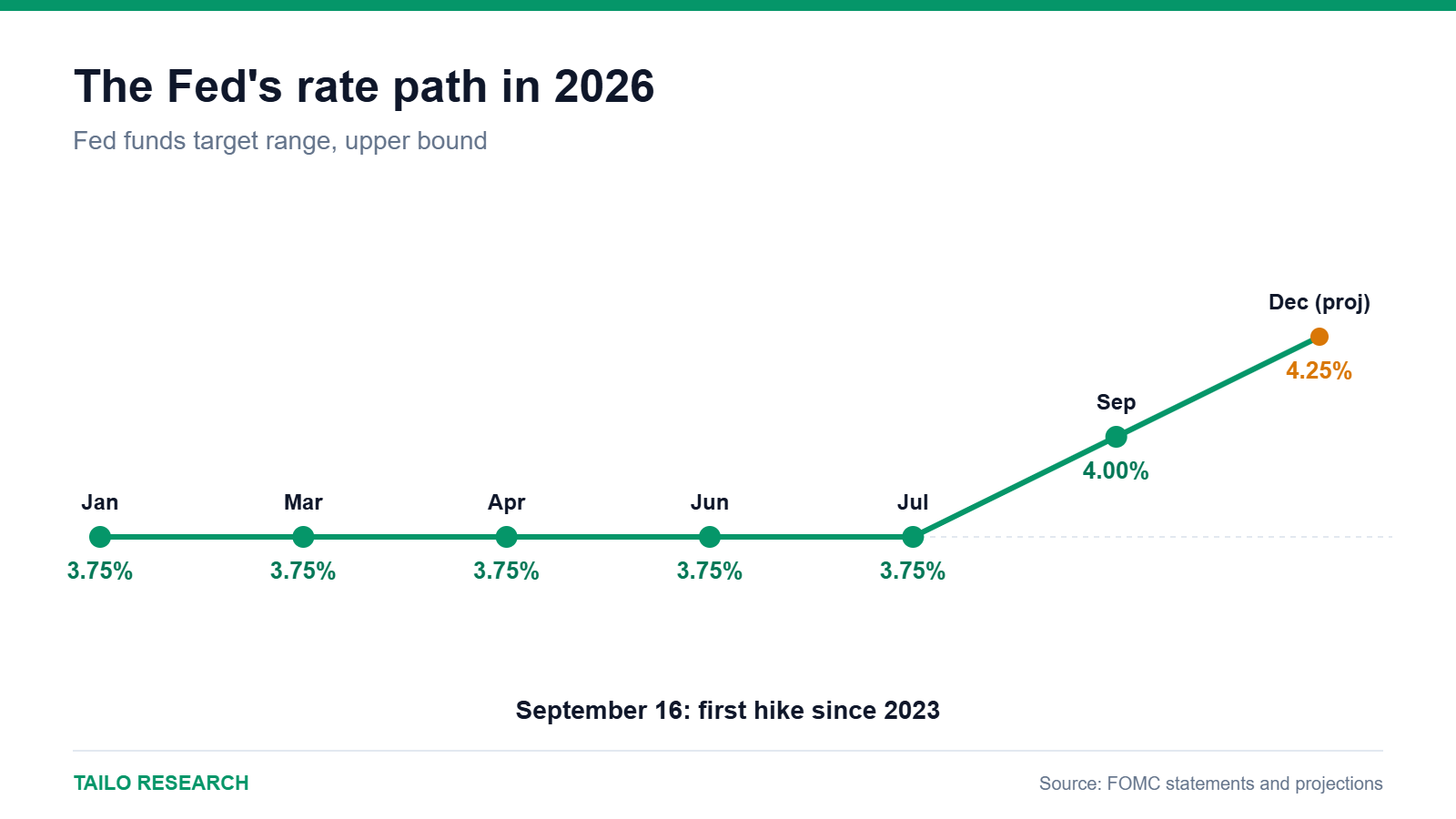
The Committee’s Summary of Economic Projections showed 16 of 18 officials expecting at least one further rate increase in 2026, with year-end rate projections clustered between 4.1% and 4.4%. Looking further out, opinion is more split: for 2027, eight officials see another hike, six expect the rate to hold steady, and four project cuts. The next FOMC decision is scheduled for October 28, 2026.
How markets reacted
Major indexes initially rose on the news but reversed and fell later in the session after Warsh’s press conference, with the S&P 500 and Nasdaq giving back early gains. The 10-year Treasury yield pushed toward multi-year highs, and the US Dollar Index (DXY) advanced toward the 100 level, its firmest level since late July, as the dollar’s three-week losing streak reversed.
What a hiking cycle means for different assets
| Asset class | Typical effect of higher rates | What to watch |
|---|---|---|
| Growth & tech stocks | Higher discount rates can pressure valuations | Whether earnings growth offsets multiple compression |
| Bonds | Existing bond prices fall as yields rise | New issuance offers higher yields for savers |
| US Dollar | Tends to strengthen on rate differentials | Dollar strength can pressure commodities and emerging markets |
| Crypto | Often trades as a risk asset; can face headwinds | Liquidity conditions and risk appetite more broadly |
| Leveraged futures & CFD positions | Financing and margin costs can be more sensitive to the rate backdrop | Check your broker’s current margin and overnight financing rates |
What comes next
With the September hike delivered, attention turns to the incoming data between now and the October 28 meeting. Traders are watching whether upcoming inflation and employment reports validate the Fed’s “solid pace” description of the economy, and whether Fed speakers this week soften or reinforce the case for another hike. For a look at this week’s specific calendar, see our week ahead preview.
Key takeaways
- The Fed raised rates 25bps to 3.75%-4.00% on September 16, 2026, its first hike since 2023.
- Most FOMC members expect at least one more hike before year-end; the next decision is October 28.
- Higher rates tend to pressure growth-stock valuations and support the dollar, while raising costs on leveraged positions.
Want to trade what you read here as a CFD alongside TradingView charts? Open a Vantage account. This is an affiliate link: we may earn a commission at no extra charge from us. CFDs are complex instruments and carry a high risk of losing money rapidly due to leverage; most retail accounts lose money. See our Affiliate Disclosure and Risk Disclaimer.
Educational content only, not investment advice. Trading and investing involve risk, including the loss of your capital. Read our Risk Disclaimer and Affiliate Disclosure.


Leave a Reply