

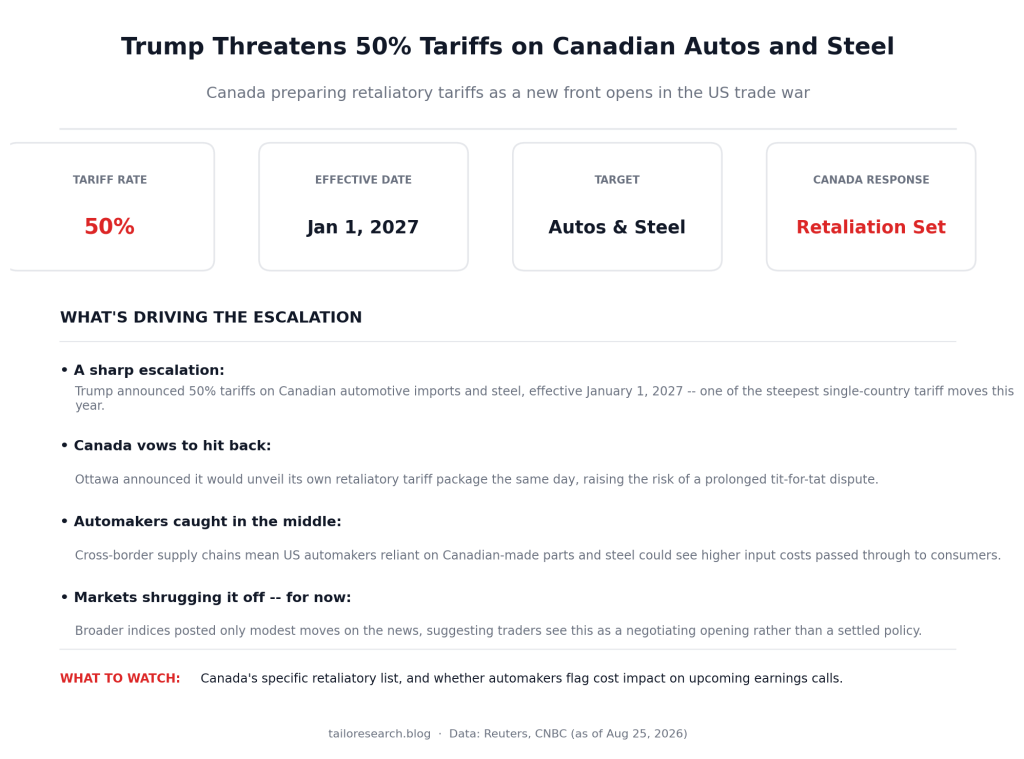
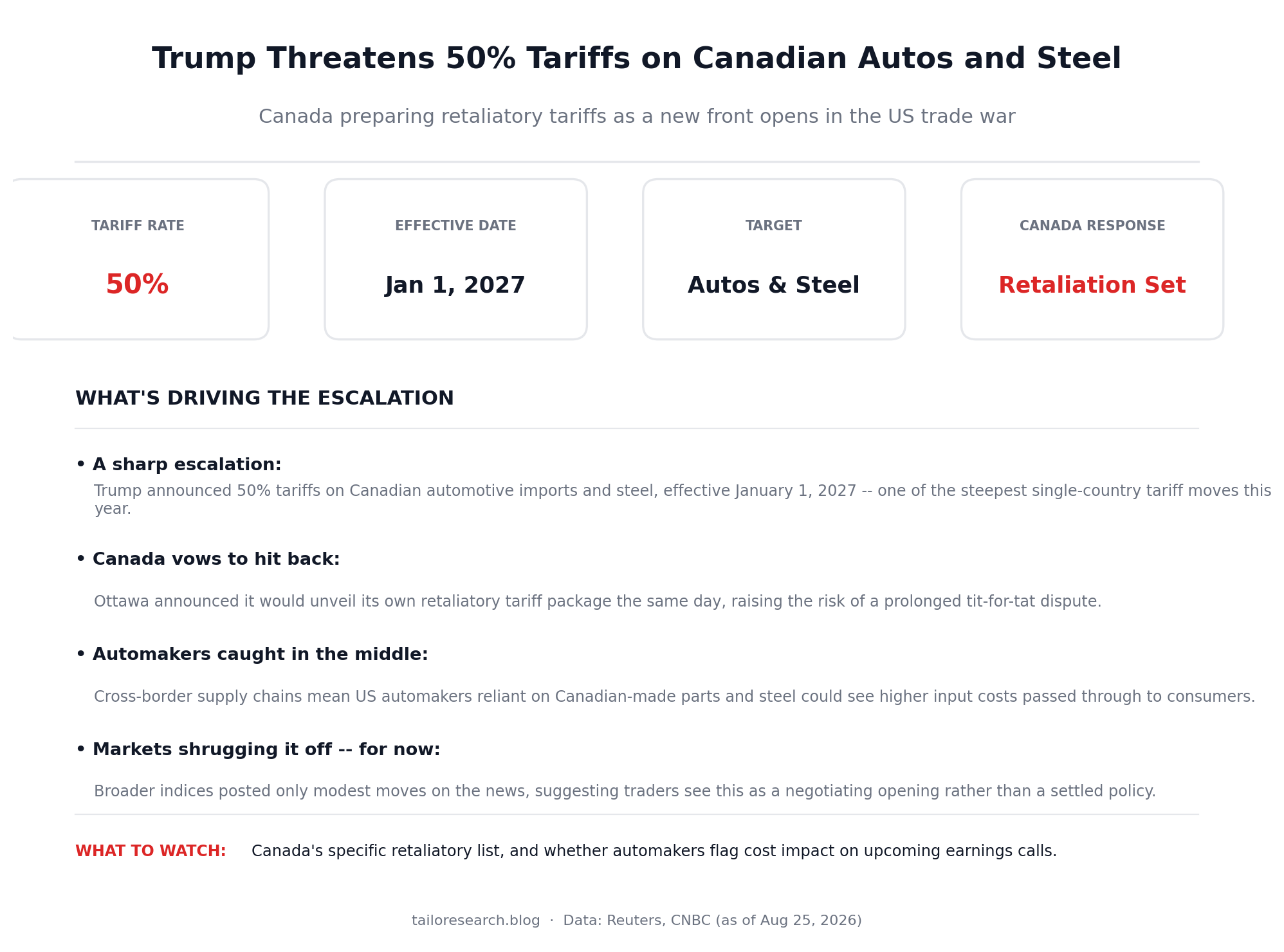
The US-Canada trade relationship took a sharp turn on August 25 when President Trump announced 50% tariffs on Canadian automotive imports and steel, effective January 1, 2027. Canada wasted no time responding, confirming it would unveil its own retaliatory tariff package the same day. It is one of the most aggressive single-country tariff moves this year, and it lands squarely on an industry built around supply chains that cross the border multiple times before a finished vehicle ever reaches a dealership.
Why Automakers Are in the Crosshairs
North American auto manufacturing has been built for decades around a tightly integrated US-Canada-Mexico supply chain, with parts and partially assembled vehicles often crossing borders more than once before final assembly. A 50% tariff on Canadian steel and autos would raise input costs across the industry, not just for vehicles fully assembled in Canada but for any manufacturer sourcing Canadian-made steel or components for US plants.
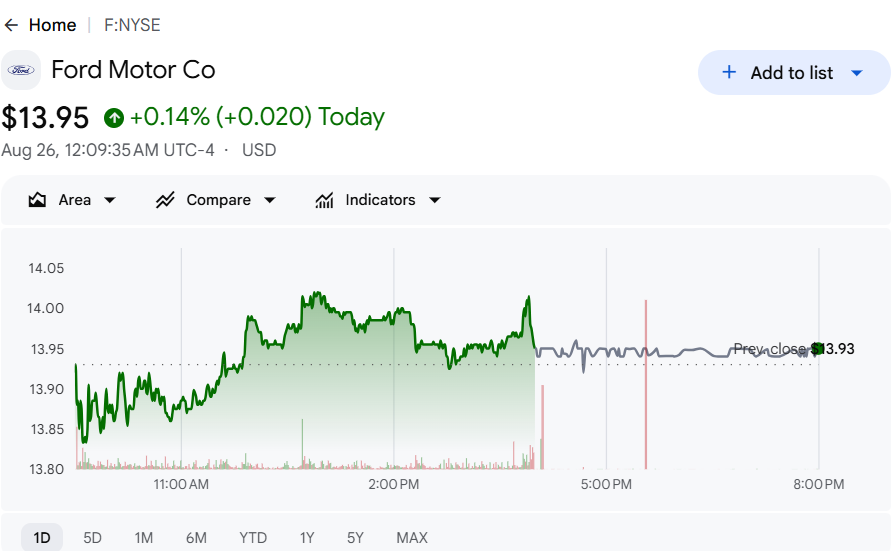
Ford, GM, and Stellantis all operate major assembly plants on both sides of the border, which is exactly why a prolonged tariff fight could pressure margins broadly rather than hitting one company in isolation. So far, though, individual automaker stocks have shown limited reaction, which is itself informative.
A Negotiating Opening, Not a Done Deal
Broader indices barely moved on the announcement, and individual automaker stocks were little changed as well. That muted reaction suggests markets are reading this as an opening position in a longer negotiation, rather than a locked-in policy — a pattern that has played out with other tariff threats this cycle, several of which were later softened or delayed before taking effect.
What to watch: Canada’s specific retaliatory list, due the same day as the US announcement, will clarify which American industries face reciprocal pressure. It is also worth watching whether Ford, GM, or Stellantis address the cost impact directly on upcoming earnings calls — that would be the clearest signal of how seriously the industry is taking this.
Trading currency and equity volatility around trade-policy headlines requires quick, reliable execution. Vantage Markets offers CFDs on major indices and FX pairs for traders looking to position around events like this.
Risk Disclaimer: CFDs are complex instruments and come with a high risk of losing money rapidly due to leverage. You should consider whether you understand how CFDs work and whether you can afford to take the high risk of losing your money. Past performance is not indicative of future results.
Affiliate Disclosure: This post contains an affiliate link. If you sign up through it, Tailo Research may earn a commission at no extra cost to you. We only recommend brokers and products we believe offer genuine value to our readers.
 Tailo-Research
Leave a comment