

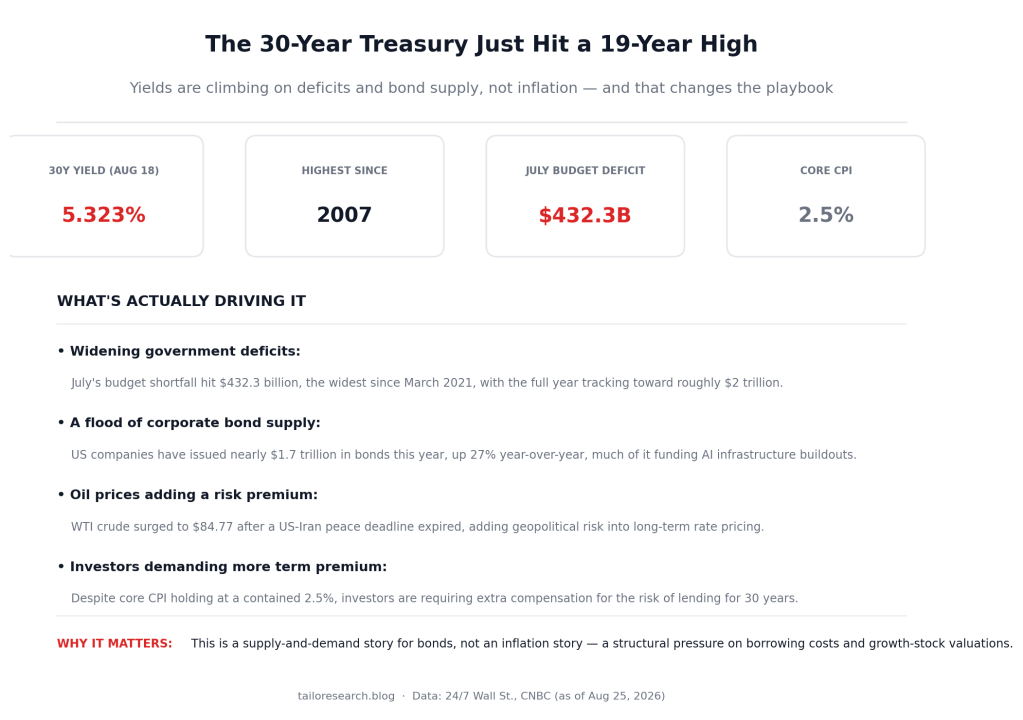
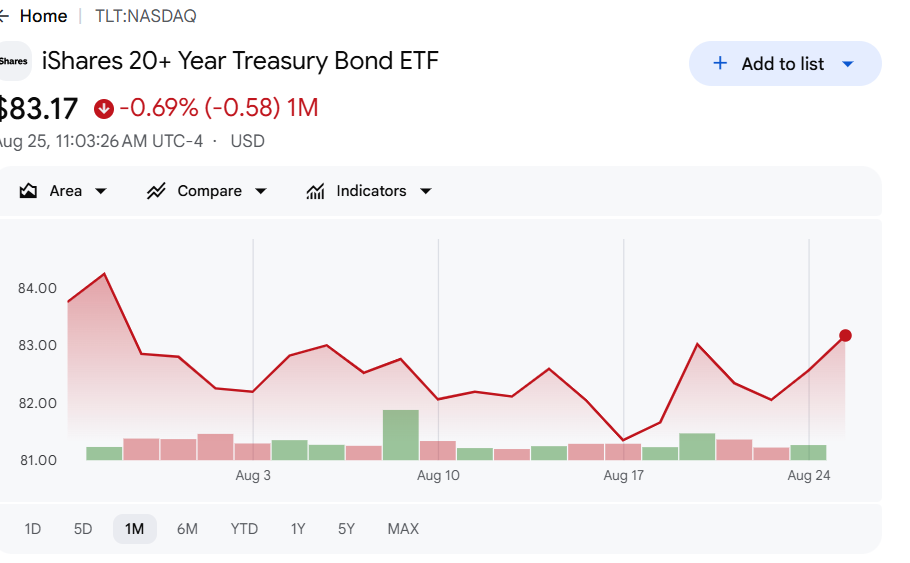
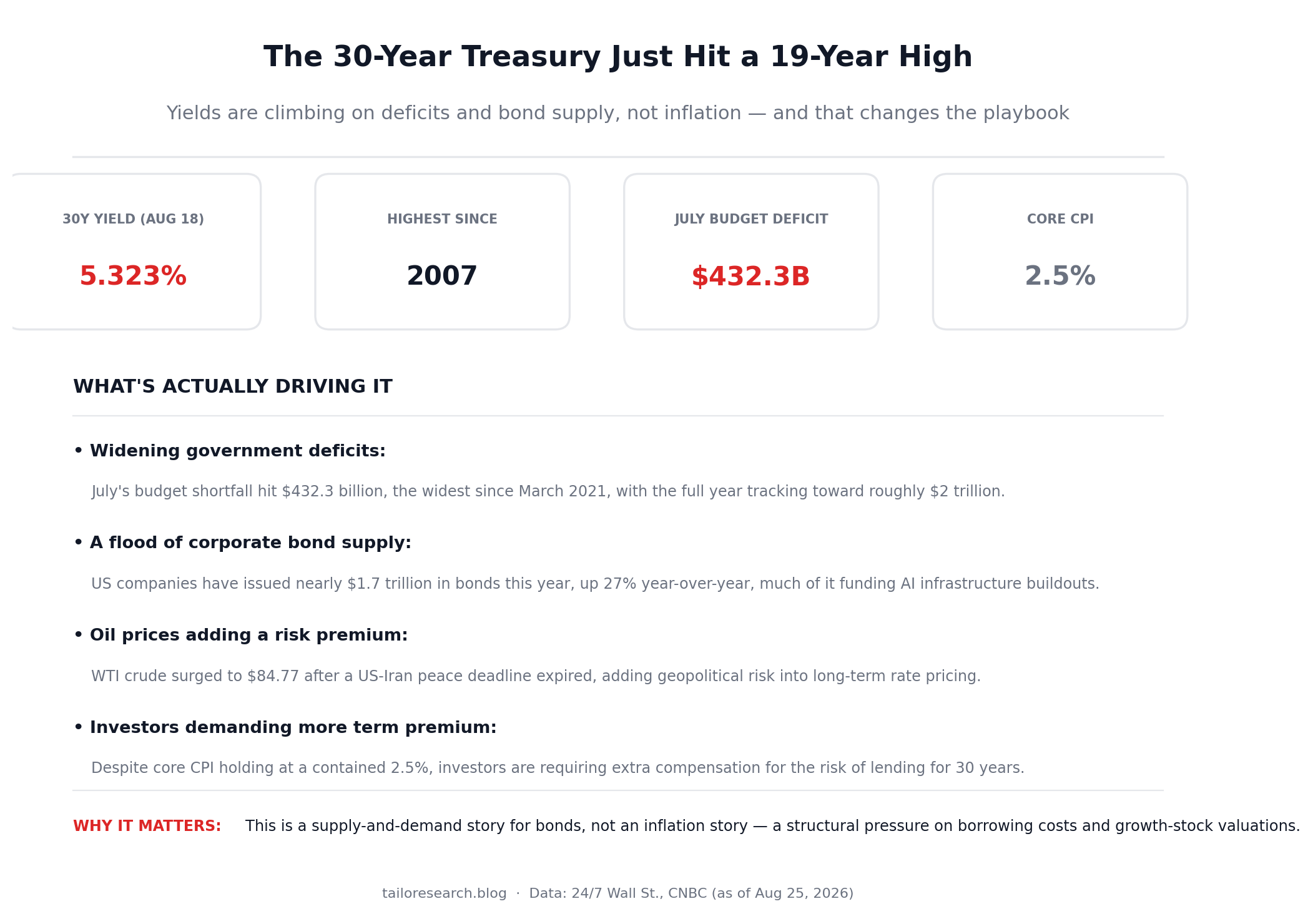
The 30-year Treasury yield touched 5.323% on August 18 — its highest level since 2007. That’s the kind of headline that normally screams “inflation panic,” but this move looks different. Core inflation is still sitting at a contained 2.5%. What’s actually pushing long-term borrowing costs to a 19-year high is a supply-and-demand story for bonds themselves, not a price-stability story.
What’s Actually Driving It
Widening government deficits. July’s budget shortfall hit $432.3 billion — the widest since March 2021 — with the full fiscal year tracking toward roughly $2 trillion. More deficit spending means more Treasury issuance, and more supply without matching demand pushes yields higher.
A flood of corporate bond supply. US companies have issued nearly $1.7 trillion in bonds this year, up 27% year-over-year, much of it funding AI infrastructure buildouts. That’s a huge amount of competing supply hitting the same pool of fixed-income buyers at the same time as Treasury issuance.
Oil prices adding a risk premium. WTI crude surged to $84.77 after a US-Iran peace deadline expired, injecting fresh geopolitical risk into long-term rate pricing. Higher energy costs and heightened uncertainty both tend to push investors to demand more compensation for locking up money for three decades.
Why the Distinction Matters
Despite core CPI holding at a relatively contained 2.5%, investors are requiring extra compensation — a higher term premium — for the risk of lending money for 30 years in an environment of growing deficits and heavy bond supply. That’s a structurally different problem than an inflation scare, and it calls for a different playbook.
This is a supply-and-demand story for bonds, not an inflation story — which means it puts structural pressure on borrowing costs and growth-stock valuations even if inflation prints stay well-behaved. Mortgage rates, corporate borrowing costs, and the valuation multiples on long-duration growth stocks are all sensitive to where the 30-year sits, regardless of what’s driving it.
Elevated and volatile long-term yields tend to spill into equity index volatility, particularly for rate-sensitive sectors like tech and real estate. Traders looking to position around continued yield volatility often use CFDs on indices and forex pairs sensitive to the rate outlook — Vantage Markets offers a range of index and forex CFDs for exactly this kind of macro-driven trading.
Risk Disclaimer: CFDs are complex instruments and come with a high risk of losing money rapidly due to leverage. You should consider whether you understand how CFDs work and whether you can afford to take the high risk of losing your money. Past performance is not indicative of future results.
Affiliate Disclosure: This post contains an affiliate link. If you sign up through it, Tailo Research may earn a commission at no extra cost to you. We only recommend brokers and products we believe offer genuine value to our readers.
 Tailo-Research
Leave a comment