

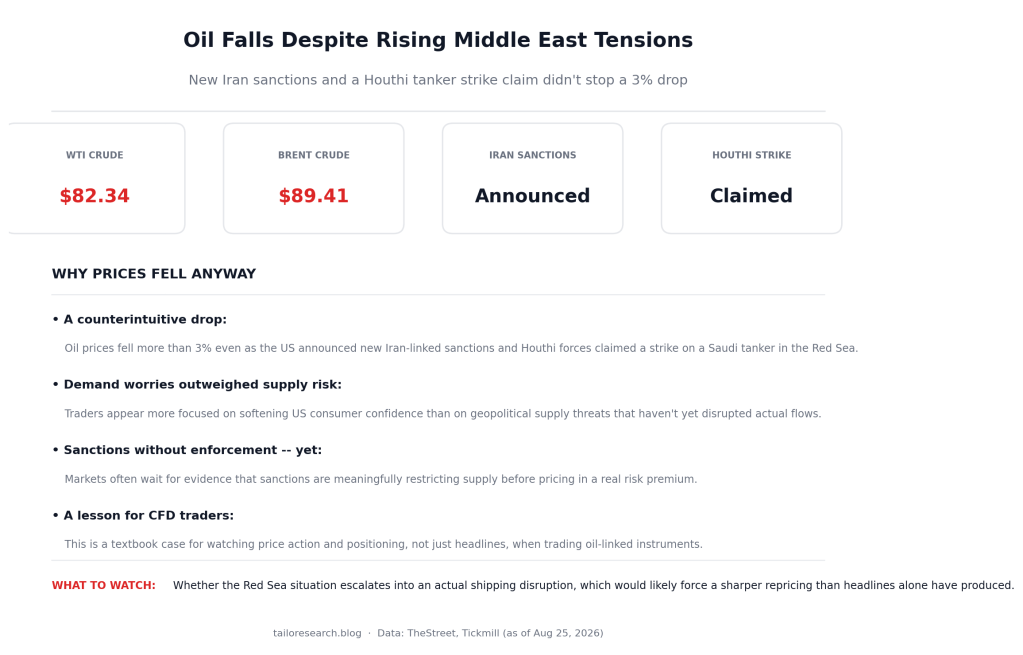
Oil prices fell more than 3% on August 25 even as geopolitical risk in the Middle East appeared to escalate: the US announced new Iran-linked sanctions, and Houthi forces claimed a strike on a Saudi tanker in the Red Sea. WTI crude dropped to $82.34 a barrel and Brent fell to $89.41 — a counterintuitive move that is worth unpacking for anyone trading oil-linked instruments.
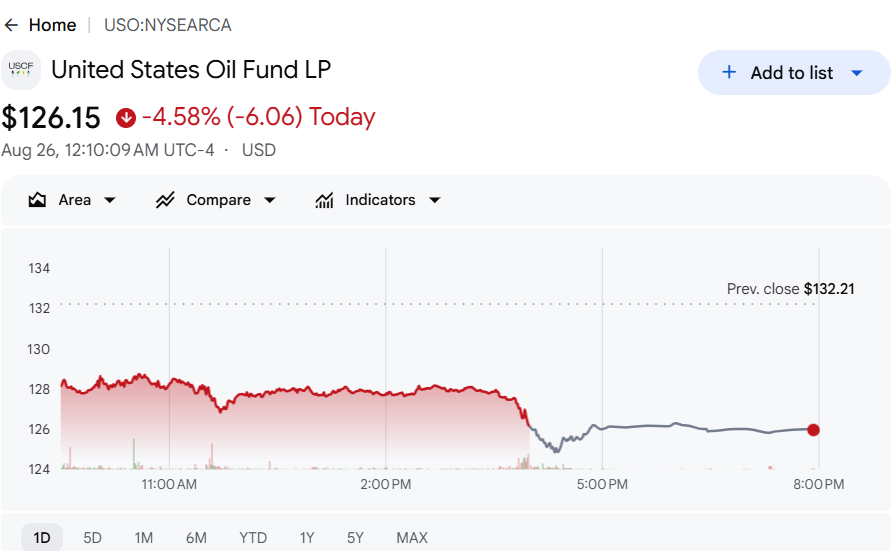
Why Prices Fell Despite Rising Tensions
Traders appear to be weighing softening US consumer confidence and broader demand concerns more heavily than the supply-side risk from Iran sanctions or the Red Sea incident. That is a reminder that oil markets price probability and enforcement, not headlines alone — sanctions without evidence of actually restricting supply, and a single claimed strike without confirmed disruption to shipping, tend not to move price on their own.
This is also a textbook illustration of a broader lesson for day traders: geopolitical headlines feel urgent, but price action and positioning often tell a different, more useful story about what the market actually believes will happen next.
The Real Risk Is Still Out There
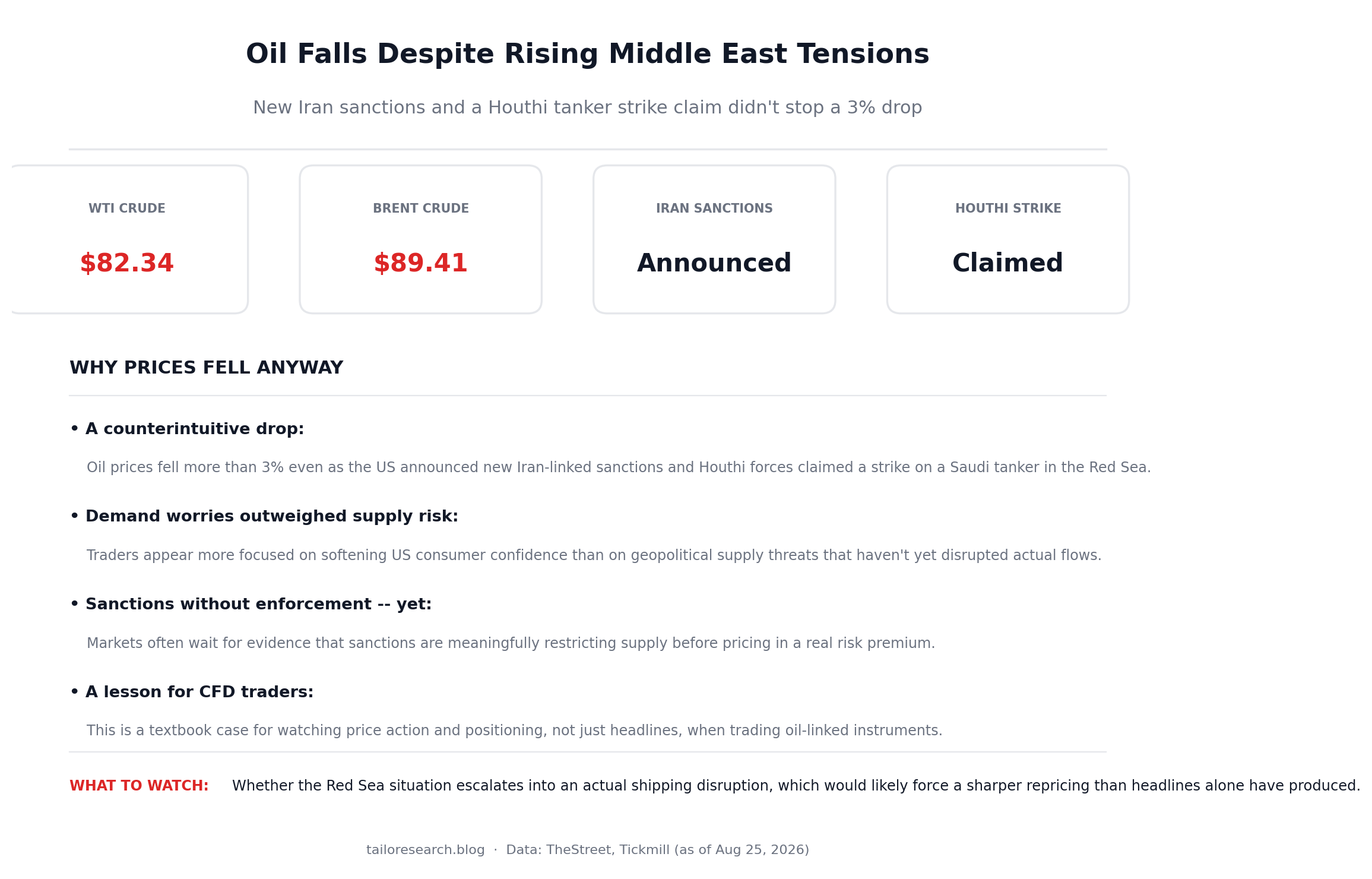
None of this means the geopolitical risk is irrelevant — it means the market hasn’t yet seen proof it matters for actual supply. That could change quickly.
What to watch: whether the Red Sea situation escalates into an actual shipping disruption. If tanker traffic is meaningfully affected, expect a much sharper repricing than headlines alone have produced so far.
Oil’s reaction here shows exactly why disciplined risk management matters when trading around geopolitical headlines. Vantage Markets offers CFDs on crude oil and other commodities with competitive spreads for active traders.
Related reading: For a fresher look at oil this week, see Oil Drops Sharply as Geopolitical Risk Eases, plus Copper Blasts Through a Record High on US Tariff Fears for another commodity move.
Risk Disclaimer: CFDs are complex instruments and come with a high risk of losing money rapidly due to leverage. You should consider whether you understand how CFDs work and whether you can afford to take the high risk of losing your money. Past performance is not indicative of future results.
Affiliate Disclosure: This post contains an affiliate link. If you sign up through it, Tailo Research may earn a commission at no extra cost to you. We only recommend brokers and products we believe offer genuine value to our readers.

 Tailo-Research
Leave a comment