

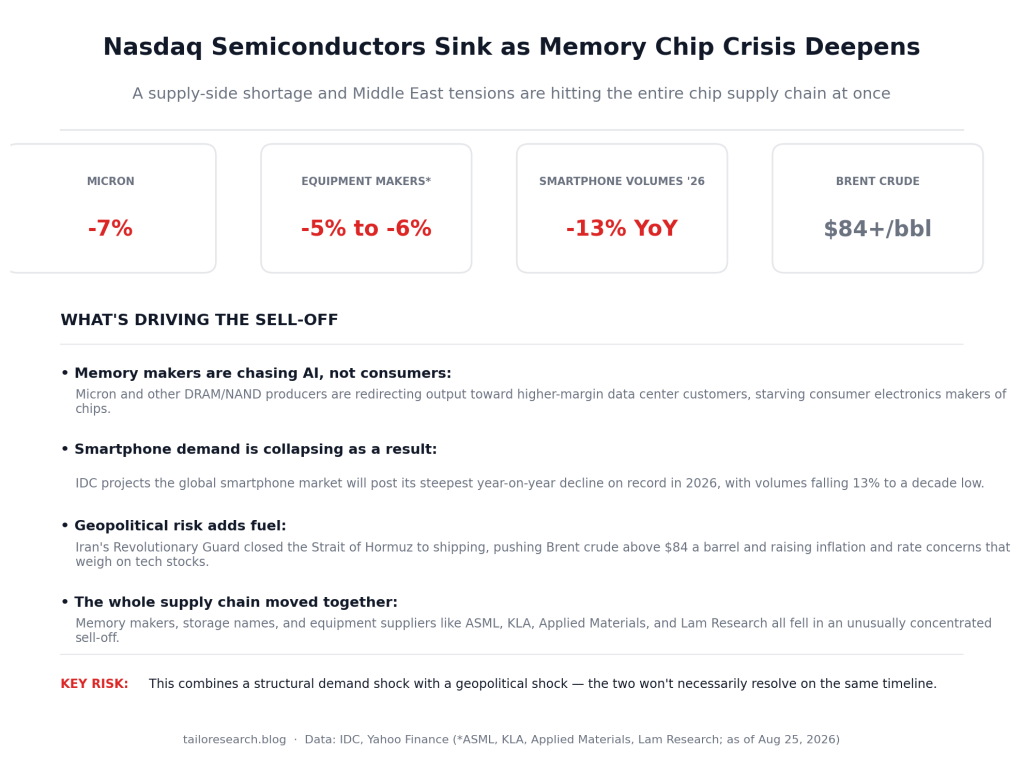
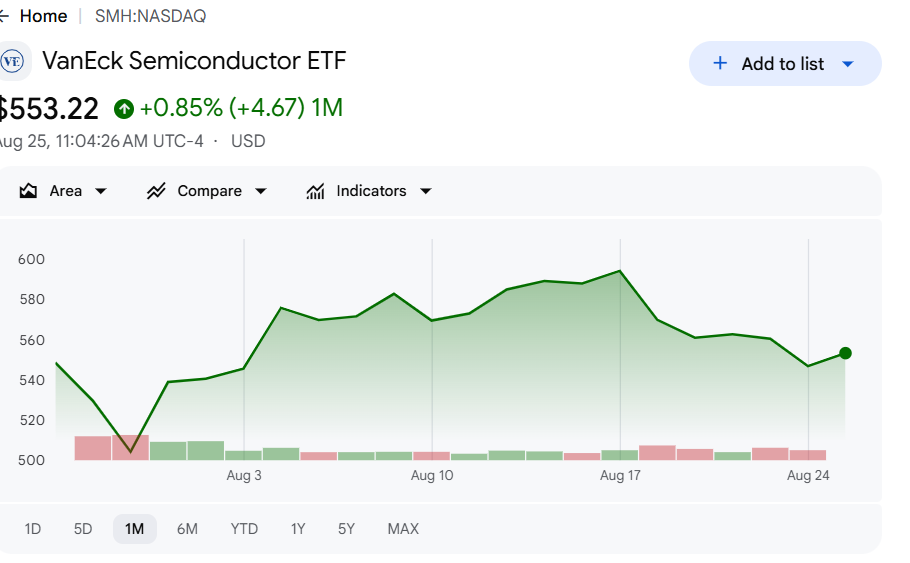
Semiconductor stocks sold off sharply this week as a supply-side memory chip shortage collided with fresh Middle East tensions — a rare case of a structural demand shock and a geopolitical shock hitting the same sector at once. Micron dropped 7%, equipment makers fell 5-6%, and the sell-off spread across the entire chip supply chain.
What’s Actually Driving the Sell-Off
Memory makers are chasing AI, not consumers. Micron and other DRAM and NAND producers are redirecting output toward higher-margin data center customers, starving consumer electronics makers of the chips they need. When your biggest supplier would rather sell to hyperscalers than to phone makers, the squeeze shows up fast.
Smartphone demand is collapsing as a result. IDC now projects the global smartphone market will post its steepest year-on-year decline on record in 2026, with volumes falling 13% to a decade low. Higher memory costs are getting passed through to device prices, and demand is responding exactly as you’d expect.
Geopolitical risk is adding fuel. Iran’s Revolutionary Guard closed the Strait of Hormuz to shipping, pushing Brent crude above $84 a barrel. Higher oil prices raise inflation concerns and rate-path uncertainty, both of which weigh on richly-valued tech stocks — semiconductors included.
The Whole Supply Chain Moved Together
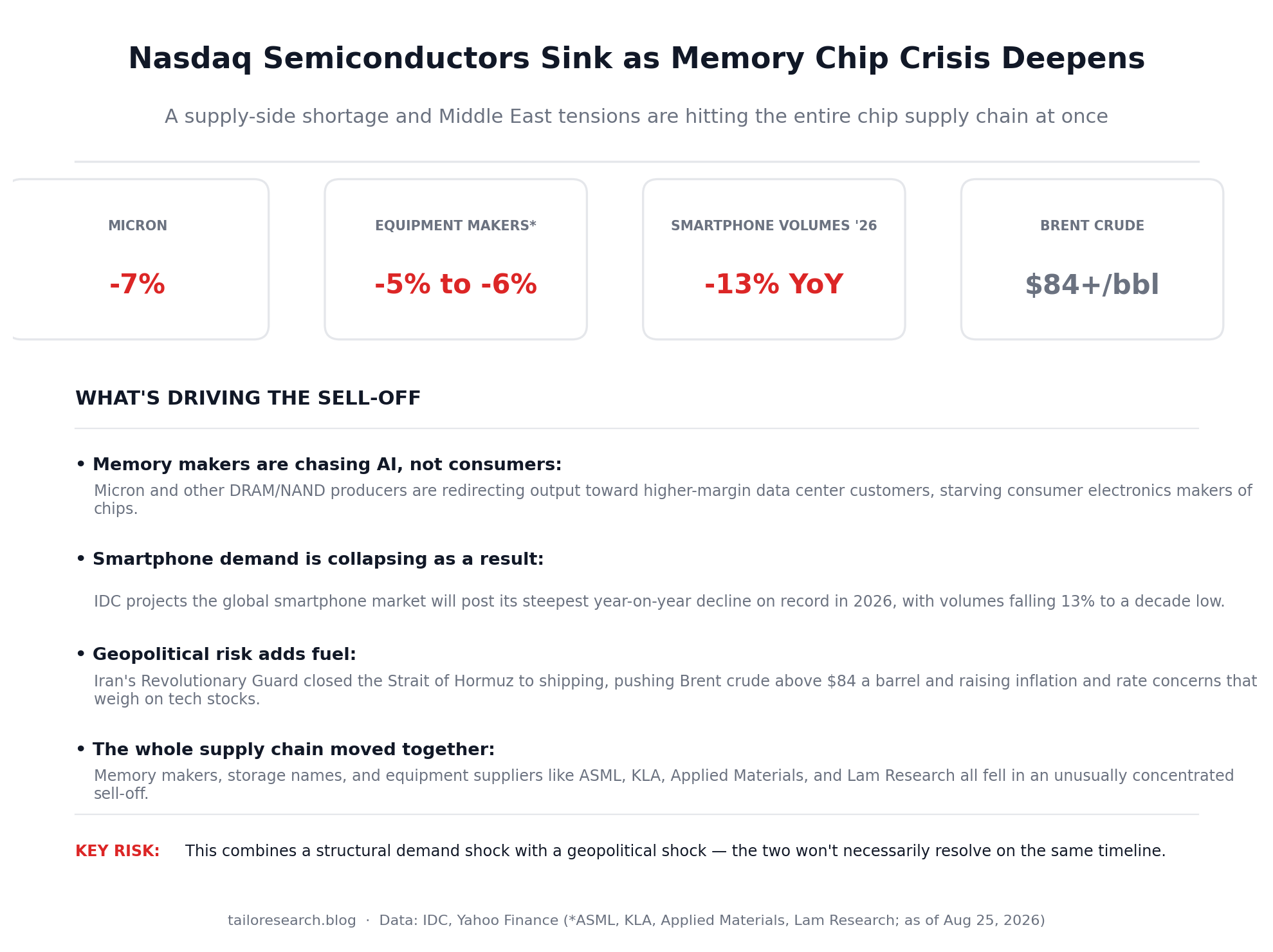
This wasn’t isolated to Micron. Memory makers, storage names, and equipment suppliers — ASML, KLA, Applied Materials, and Lam Research among them — all fell in an unusually concentrated sell-off. That kind of correlated move across an entire supply chain, rather than a single earnings-driven stock drop, is typically a sign the market is repricing a structural issue rather than a one-off disappointment.
The key risk to watch: this combines a structural demand shock (AI capex reallocating supply away from consumer electronics) with a geopolitical shock (Strait of Hormuz tensions). The two won’t necessarily resolve on the same timeline — memory supply reallocation could persist for quarters even if the Middle East situation cools quickly, or vice versa.
For traders looking to position around continued volatility in Nasdaq semiconductor names, having access to fast execution on both individual equities and index CFDs matters when a sector is moving this sharply. Vantage Markets offers Nasdaq index and single-stock CFDs with competitive spreads for trading these kinds of sector-wide moves.
Risk Disclaimer: CFDs are complex instruments and come with a high risk of losing money rapidly due to leverage. You should consider whether you understand how CFDs work and whether you can afford to take the high risk of losing your money. Past performance is not indicative of future results.
Affiliate Disclosure: This post contains an affiliate link. If you sign up through it, Tailo Research may earn a commission at no extra cost to you. We only recommend brokers and products we believe offer genuine value to our readers.
 Tailo-Research
Leave a comment