

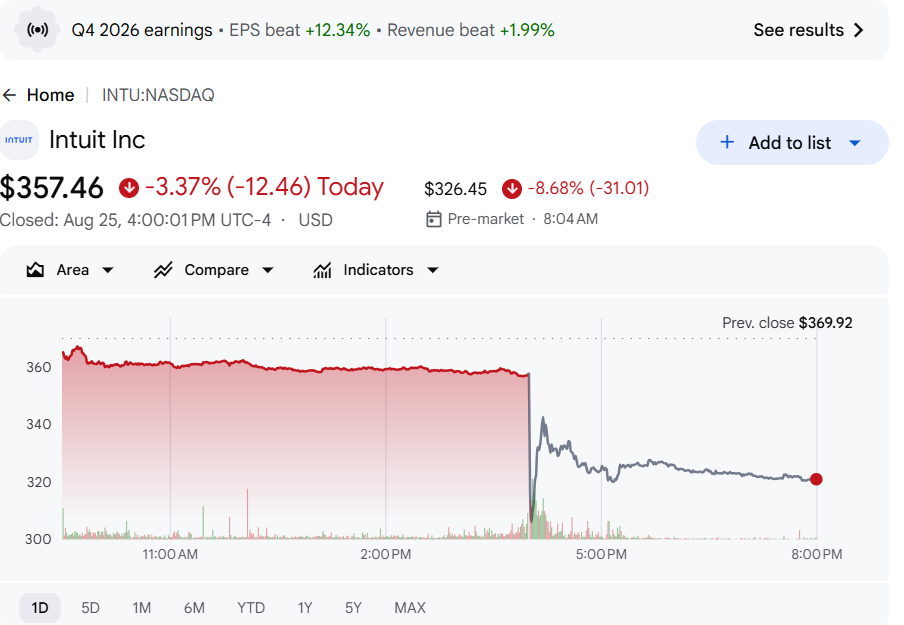
Intuit shares fell as much as 8.7% in pre-market trading on August 26 after the company beat Wall Street’s fiscal Q4 2026 estimates on both the top and bottom line — EPS beat by 12.34%, revenue beat by 1.99% — but issued FY2027 guidance that came in below what analysts had modeled. The stock had already closed the prior session down 3.37% as investors braced for the print.
Why the Stock Fell Anyway
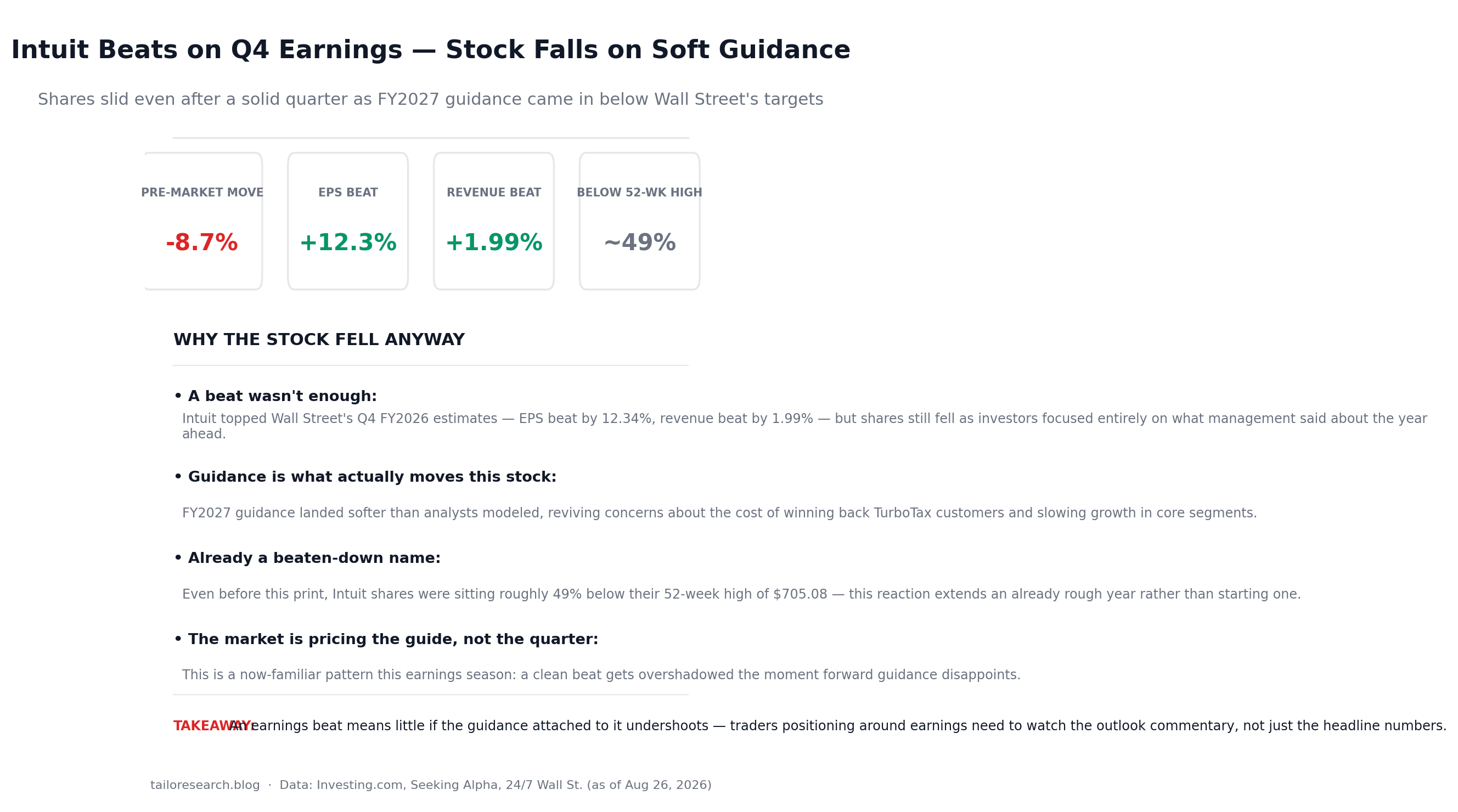
The quarter itself was clean. Intuit topped Wall Street’s Q4 FY2026 estimates on both lines, and a double-digit EPS beat is not a small miss to make up for — yet the stock still sold off sharply the next morning. That is the clearest sign that this market is trading guidance, not results.
Management’s FY2027 outlook landed softer than analysts had modeled, reviving concerns about the cost of winning back TurboTax customers and slower growth across some of Intuit’s core segments. Even before this print, shares were sitting roughly 49% below their 52-week high of $705.08 — this reaction extends an already rough year rather than starting one.
What This Means If You’re Trading Intuit
A clean beat overshadowed by soft guidance is a now-familiar pattern this earnings season — the size of the beat matters far less than whether management’s forward commentary signals acceleration or just steady-state growth.
For anyone holding a position into results, the lesson repeats: earnings-day CFD moves are driven by the guide, not the headline number, and pre-market pricing can move well before the regular session even opens.
Software and enterprise-tech names remain some of the most actively traded stocks around earnings season. Vantage Markets offers CFDs on major US tech and software equities for traders tracking this theme.
Related reading: For more on this earnings-season pattern, see Dick’s Sporting Goods Craters 30% on Earnings Miss and Super Micro Computer Jumps 9% on Cisco Partnership for more recent single-stock moves.
Risk Disclaimer: CFDs are complex instruments and come with a high risk of losing money rapidly due to leverage. You should consider whether you understand how CFDs work and whether you can afford to take the high risk of losing your money. Past performance is not indicative of future results.
Affiliate Disclosure: This post contains an affiliate link. If you sign up through it, Tailo Research may earn a commission at no extra cost to you. We only recommend brokers and products we believe offer genuine value to our readers.

 Tailo-Research
Leave a comment